Black-light ideas
What Glows Under Black Light? 35 Surprising Things, UV Tips, and a Searchable Glow Database
Find things that glow under black light, try simple experiments, compare 365 nm and 395 nm lights, and choose a glow effect for your party.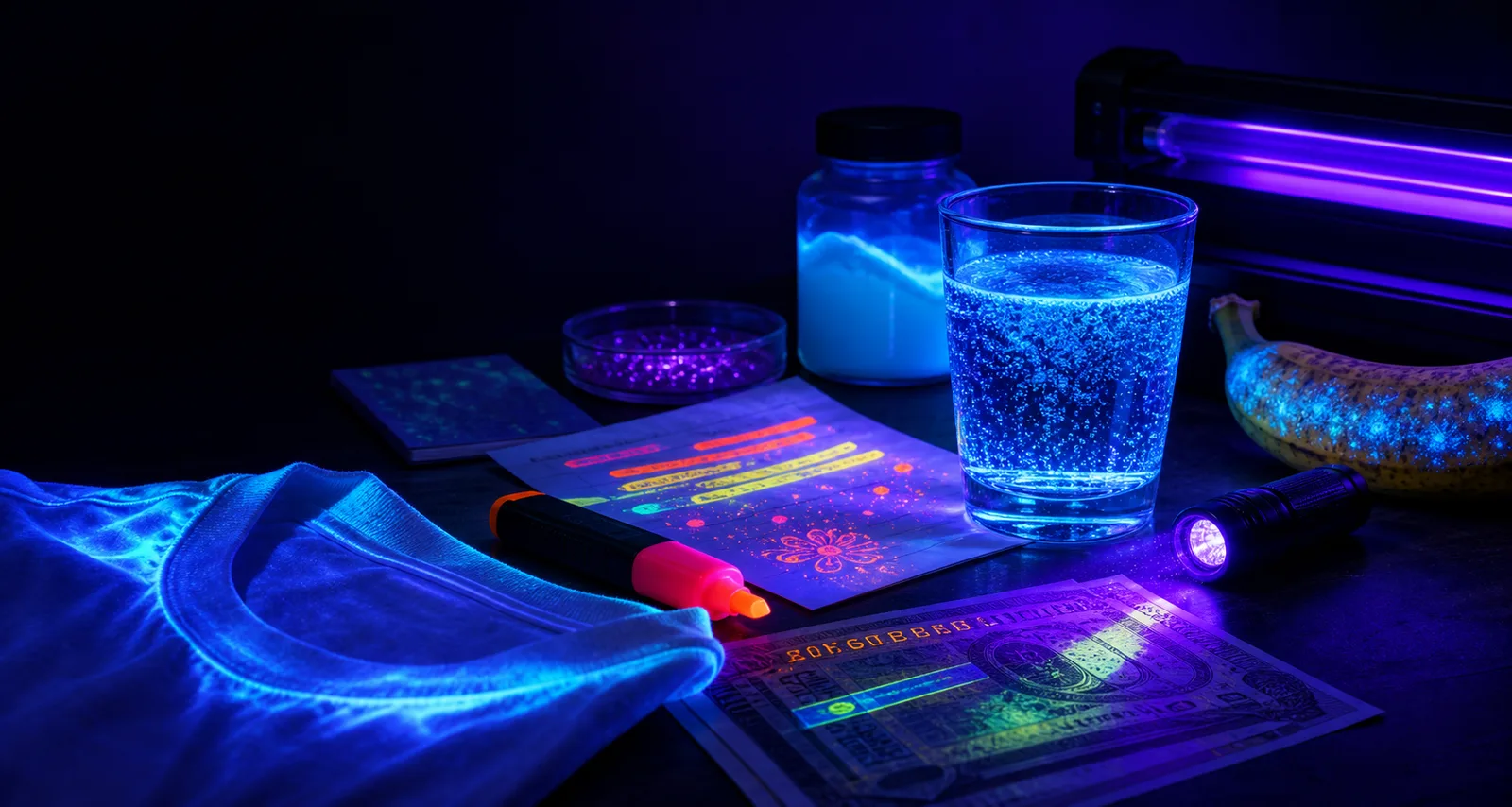
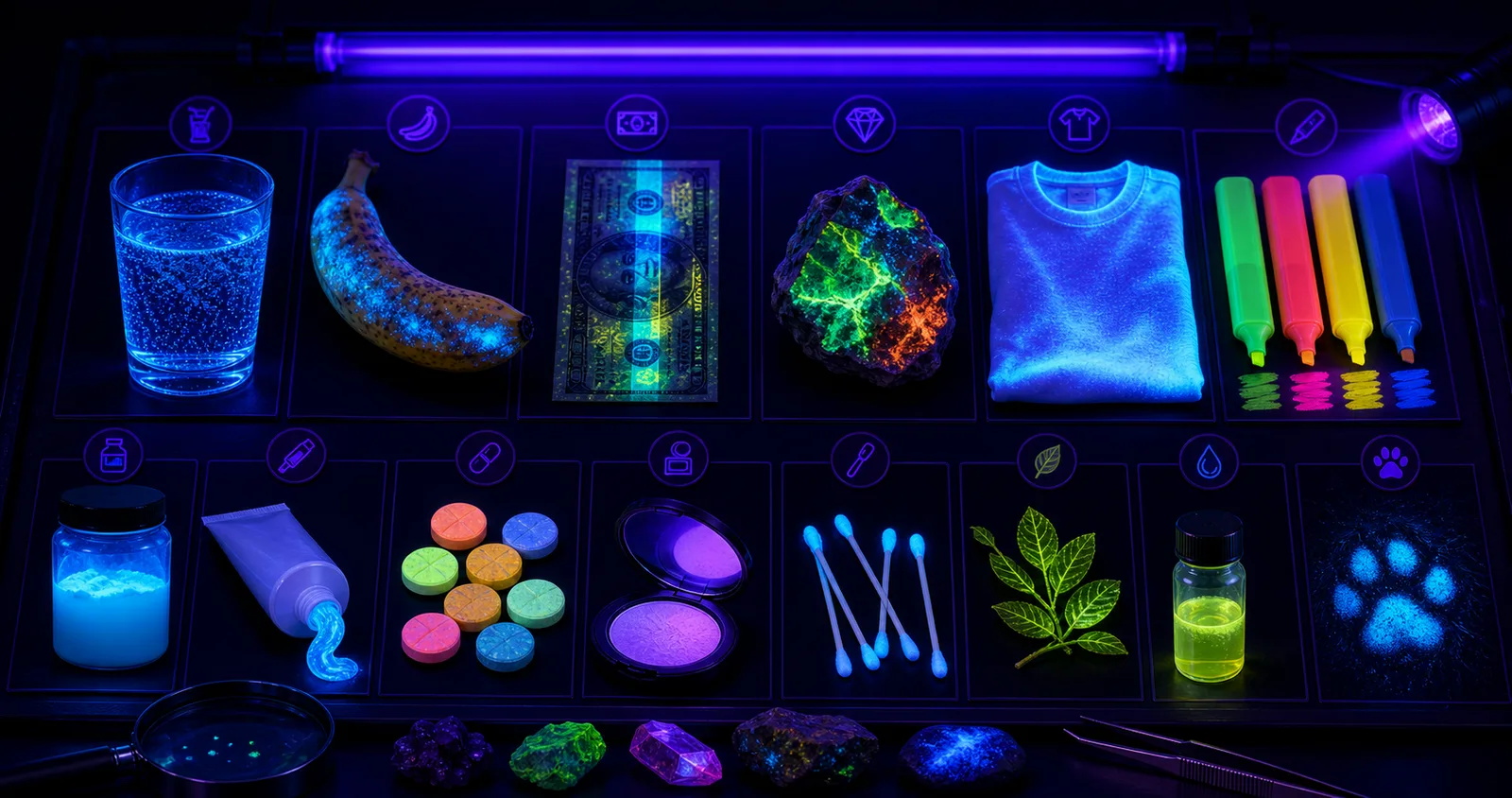
Common blacklight winners include tonic water, highlighter ink, bright white paper, white clothing with optical brighteners, whitening toothpaste, vitamin B tablets, some minerals, currency strips, petroleum jelly, and a surprising number of UV-reactive party products.
If you only want a few reliable experiments, start with tonic water, highlighters, copy paper, whitening toothpaste, a white shirt, and a modern U.S. bill.
Household items are fun for discovery, but glow drinkware, UV-reactive accessories, blacklight decor, and a good small UV light create a much stronger room-level effect.
Start here
The fastest blacklight wins for most people
These are the six items most likely to give you a clean, convincing first result without much setup.The easiest first blacklight win for almost anyone.
- Likely glow: Electric blue
- Why it works: Quinine fluoresces strongly under UV-A light.
Office supplies are some of the loudest fluorescers in the room.
- Likely glow: Neon yellow, green, orange, or pink
- Why it works: Fluorescent dyes are designed to absorb UV and emit visible light.
The wash chemistry is often doing part of the work.
- Likely glow: Cool blue-white edge glow
- Why it works: Optical brighteners from detergents can make white fabric fluoresce.
Bathroom products can be surprisingly fluorescent too.
- Likely glow: Cool blue-white
- Why it works: Some whitening formulations and optical agents fluoresce under UV.
The supplement bottle in the cabinet can outperform a lot of other tests.
- Likely glow: Bright yellow
- Why it works: Riboflavin and related compounds are notably fluorescent.
Your wallet can hide one of the most practical UV tests on the page.
- Likely glow: Varies by bill denomination
- Why it works: Modern U.S. bills use embedded security features visible under UV.
Surprising reveals
The little-known glow reveals
If you want the sticky, surprising version of the topic, these are the reveals people remember and share.Kitchen clue Which everyday drink suddenly looks electric blue? Reveal answer
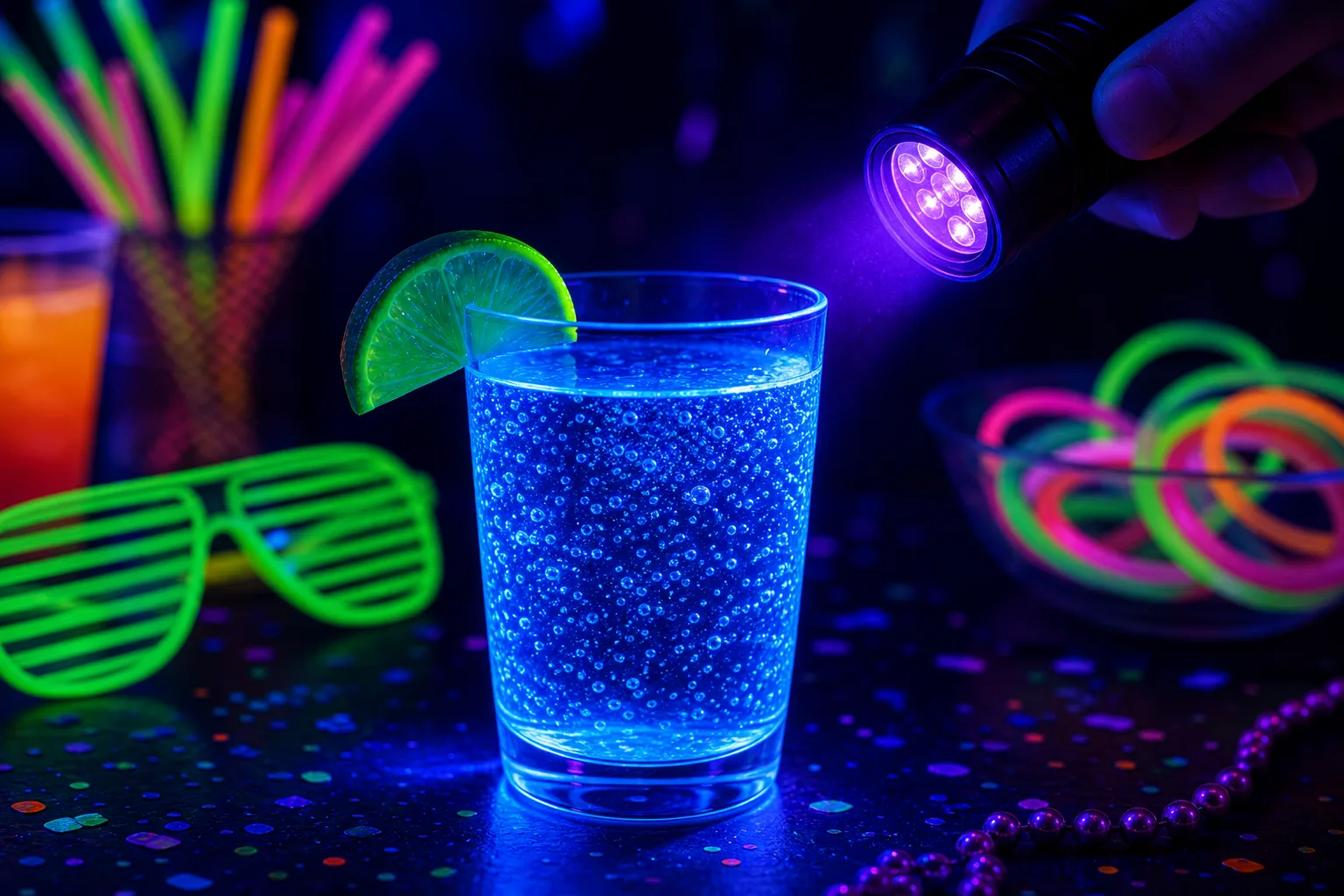
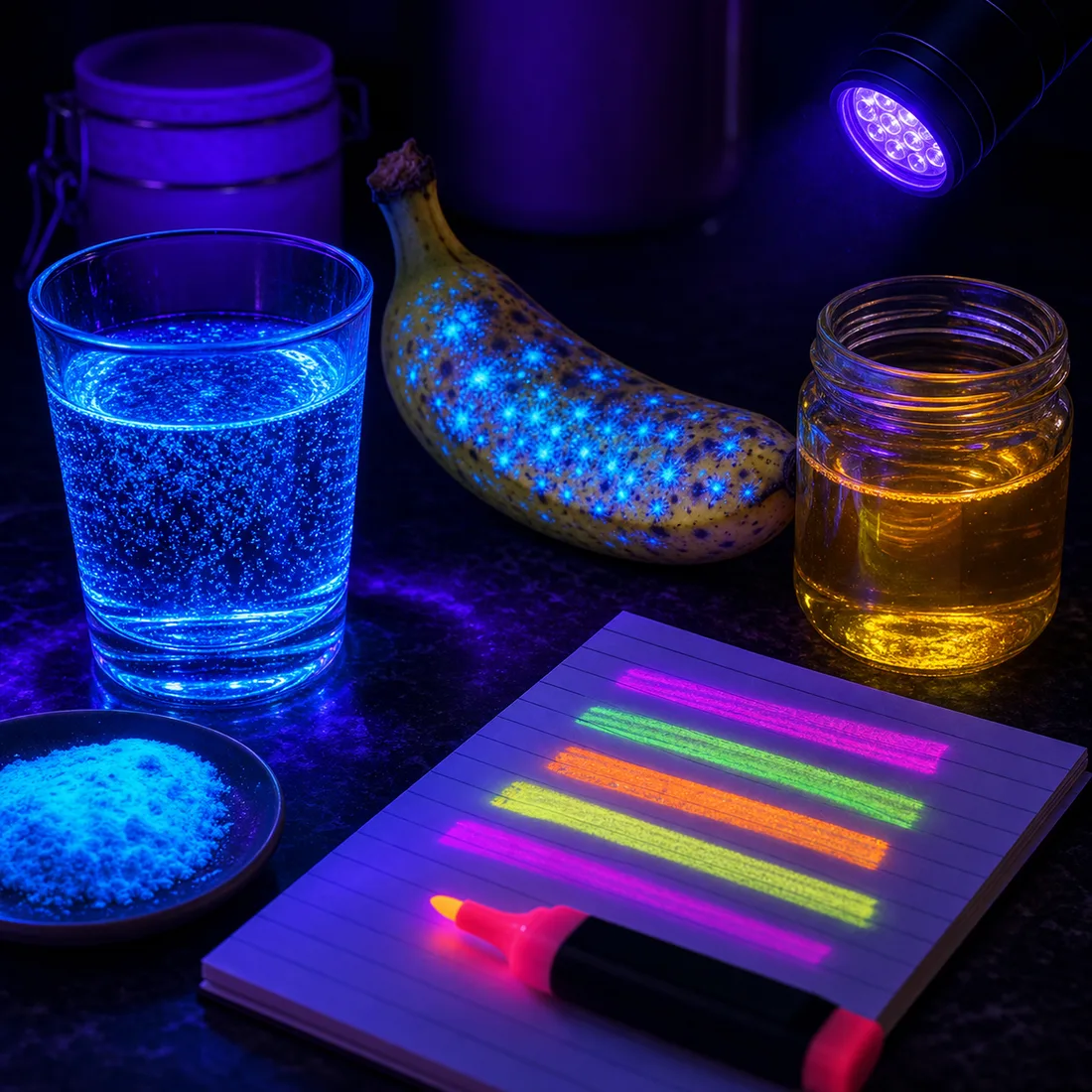
Tonic water is still the easiest blacklight surprise. Quinine makes it fluoresce with an unmistakable blue glow.
See this item in the databaseDesk surprise What turns a notebook drawer into a blacklight demo kit? Reveal answer
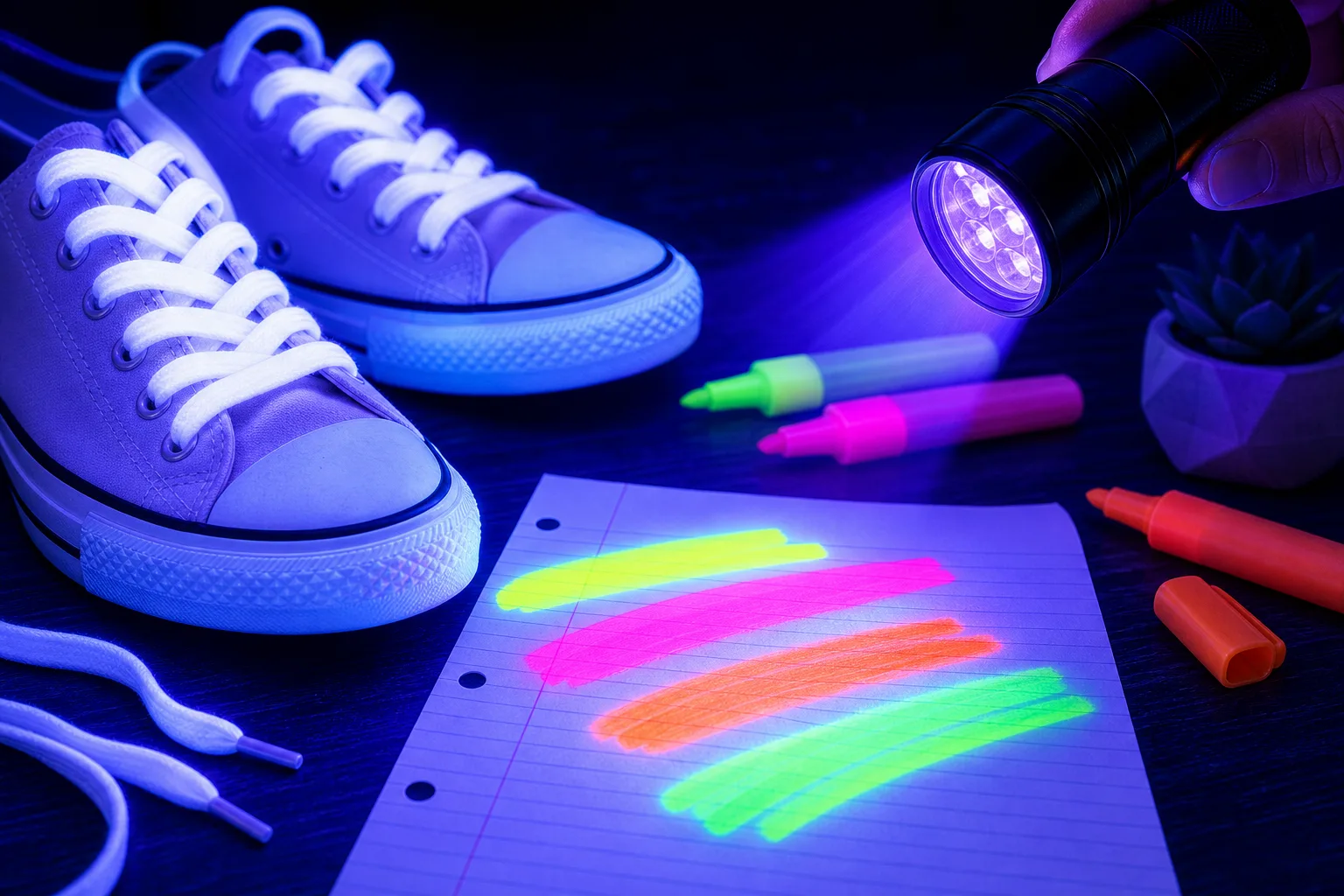
Highlighter ink, bright white paper, and some invisible-ink pens all react strongly enough to make a desk feel like a tiny glow lab.
See this item in the databaseLaundry plot twist Why do white shirts sometimes glow harder than the decor? Reveal answer
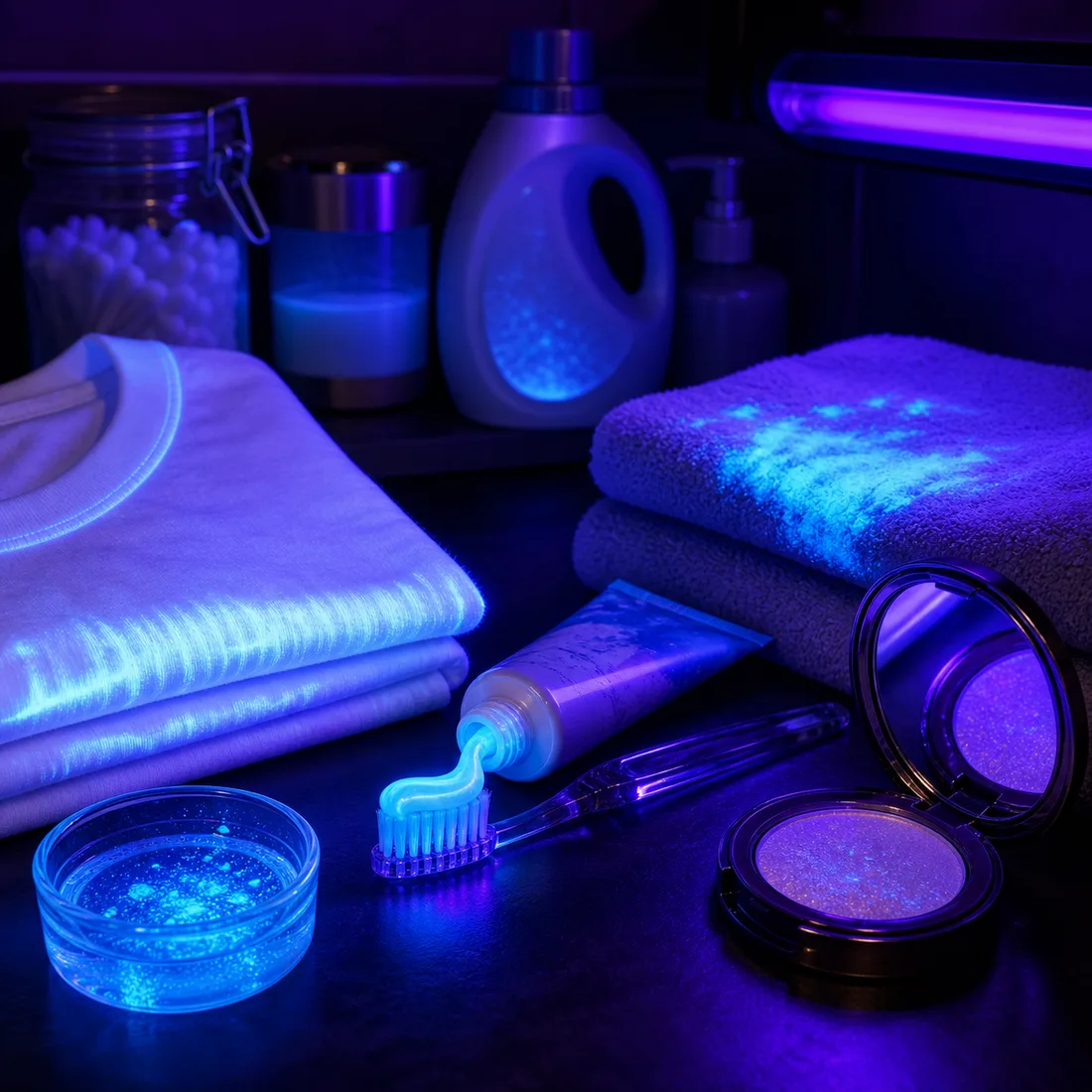
Optical brighteners left by detergents can make fabric edges, soles, and seams throw off an icy blue glow.
See this item in the databaseWallet clue What practical UV test is probably already in your pocket? Reveal answer
Modern U.S. currency strips and many ID features are built to reveal under UV, which makes them great real-world tests.
See this item in the databaseCabinet oddball Which supplement bottle can beat a lot of craft supplies? Reveal answer
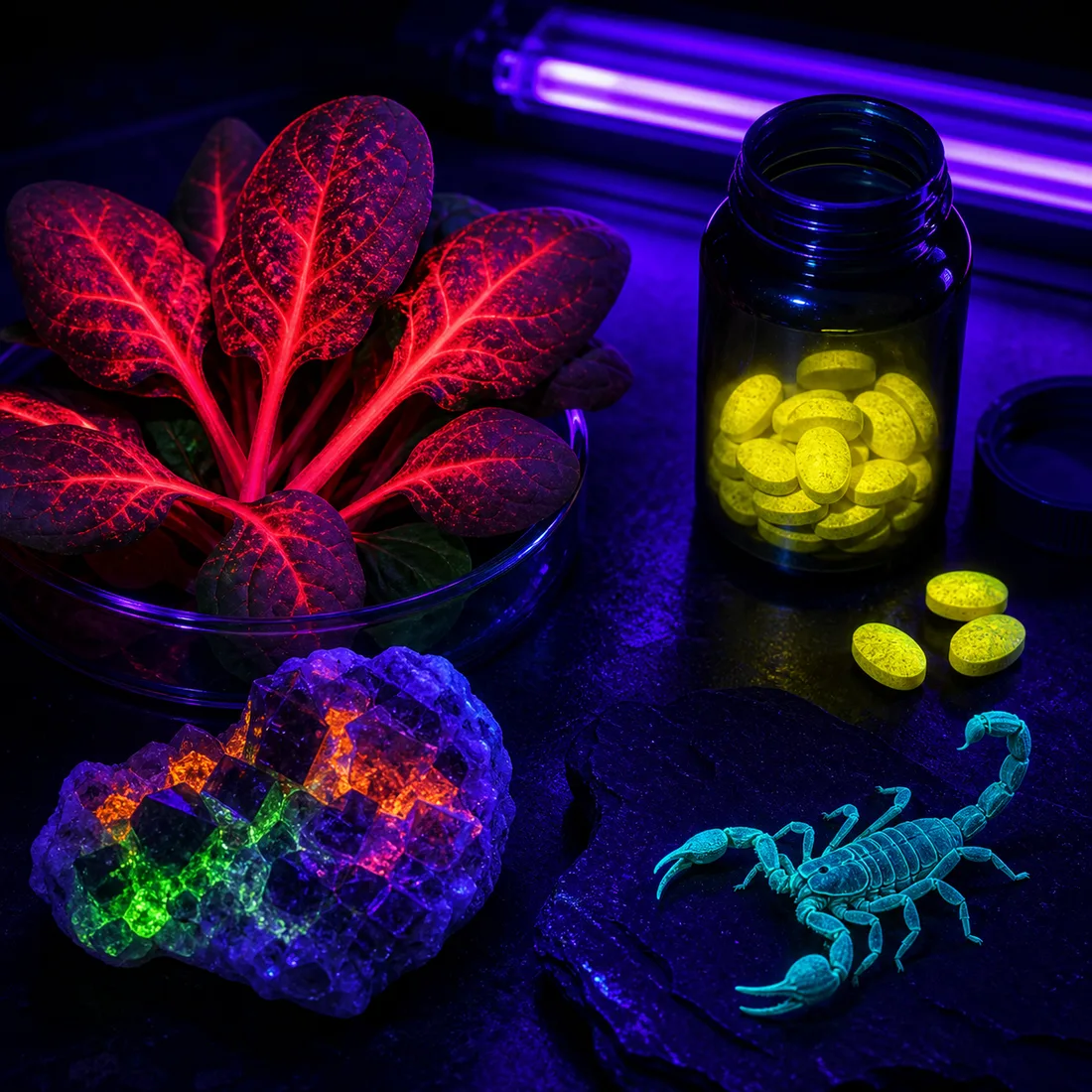
Vitamin B tablets can fluoresce a punchy yellow thanks to riboflavin-related compounds.
See this item in the databasePantry surprise What fruit looks like it has tiny stars on the peel? Reveal answer
Ripe banana freckles can glow blue under UV, which is one of the weirdest genuinely at-home tests.
See this item in the databaseOutdoor legend What creature made UV flashlights famous outside of parties? Reveal answer
Scorpions glow blue-green under UV, which is why blacklights are useful outdoors as well as indoors.
See this item in the databaseFast payoff What should you use if you want a guaranteed glow effect? Reveal answer
UV-reactive accessories, glow drinkware, blacklight decor, and a small UV light will create a stronger result than guessing with random household items.
See this item in the databaseGlow map
Where the biggest surprises usually hide
Wavelength guide
365 nm vs 395 nm: which blacklight should you actually use?
A lot of confusion around blacklights comes from using different wavelengths and expecting the same result. This is the quick guide.Usually better for testing fluorescence. It tends to reveal the glow more cleanly and throw less visible purple light into the room.
- Best for minerals, money strips, paper, and close-up testing
- Often makes faint fluorescence easier to notice
Usually cheaper and still fun, but it often looks more purple to your eyes and can make subtle fluorescence harder to read.
- Good for casual glow checks and parties
- Better when you care more about mood than scientific clarity
Standout examples
12 blacklight examples worth understanding in full
Compare glow effects, check what to expect, and choose an experiment to try first.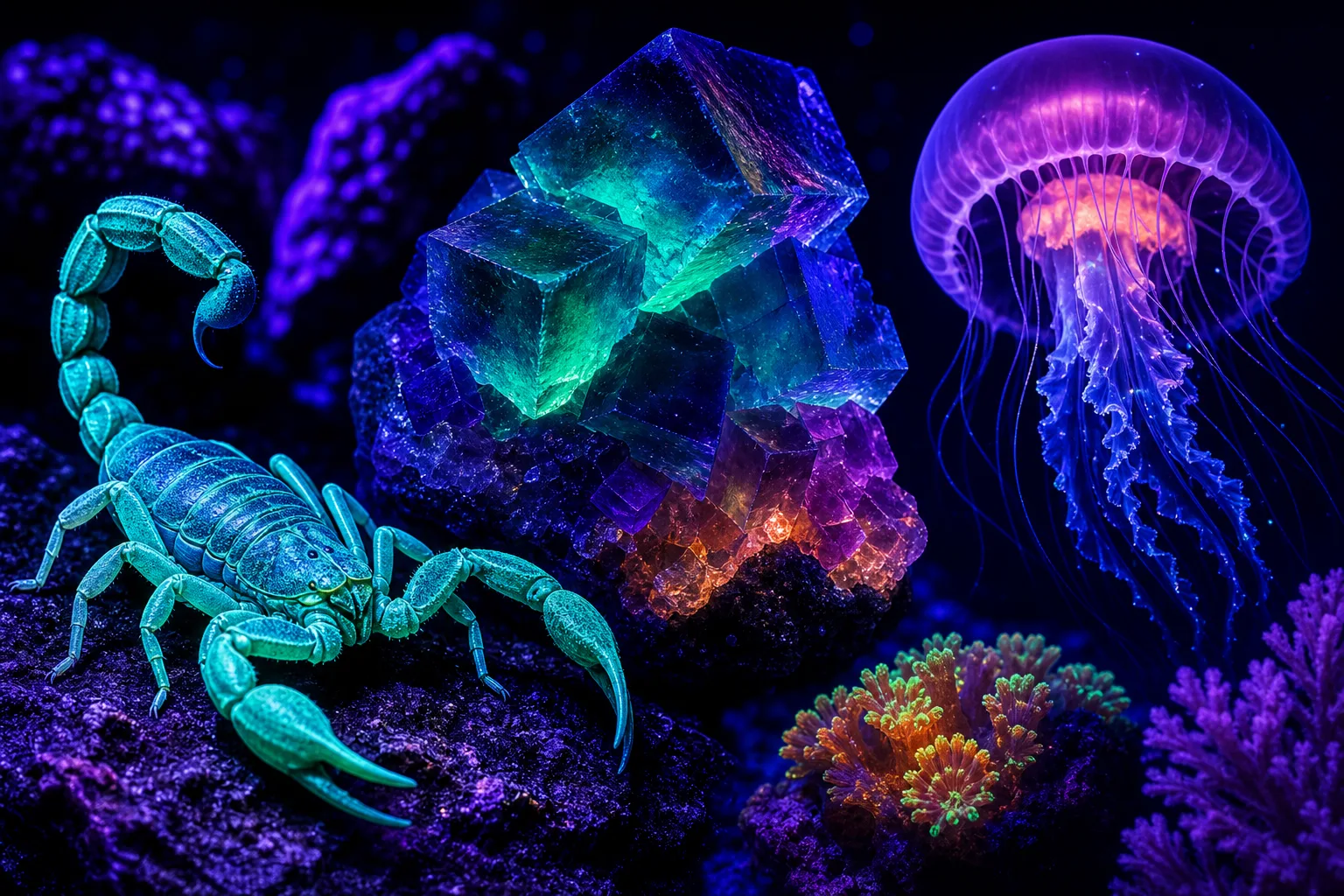
Tonic water is still the easiest first test
If someone only tries one blacklight item at home, this should probably be it.
- Likely glow: Electric blue
- Why it glows: Quinine fluoresces strongly under UV-A light.
- Try it: Pour it into a clear glass in a darker room. The blue glow is easiest to read at the edge of the liquid.
- Watch for: Diet tonic, flavored mixers, and non-tonic sparkling waters do not all behave the same way.
Highlighters explain fluorescence in five seconds
They are bright in daylight and even louder under UV, which makes them great for side-by-side demos.
- Likely glow: Neon yellow, green, orange, or pink
- Why it glows: Fluorescent dyes are designed to absorb UV and emit visible light.
- Try it: Mark white paper with yellow, pink, and green highlighters, then compare the colors under 365 nm and 395 nm lights.
- Watch for: Not every marker is fluorescent. Highlighters usually work much better than ordinary pens.
White fabric glows because laundry chemistry leaves a trace
People often think the shirt itself is special, but detergent brighteners are usually part of the reason.
- Likely glow: Cool blue-white edge glow
- Why it glows: Optical brighteners from detergents can make white fabric fluoresce.
- Try it: Compare an old white shirt, a newer bright white shirt, and a colored shirt under the same blacklight.
- Watch for: The strongest glow often appears on seams, collars, and areas with residue or brightener buildup.
Whitening toothpaste is a classic bathroom reveal
It is easy to test, easy to explain, and easy to compare against non-whitening products.
- Likely glow: Cool blue-white
- Why it glows: Some whitening formulations and optical agents fluoresce under UV.
- Try it: Place a tiny dab on a disposable surface and compare it to a plain lotion or soap nearby.
- Watch for: This is a close-up test. It is not meant to fill a room with glow.
Vitamin B tablets are one of the brightest yellow examples
This is where blacklight starts feeling less like a party trick and more like chemistry in plain sight.
- Likely glow: Bright yellow
- Why it glows: Riboflavin and related compounds are notably fluorescent.
- Try it: Shine the UV light directly on the tablet or dissolve a little in water for a stronger visible comparison.
- Watch for: Keep the test simple and contained. You want to see the color, not make a mess.
Currency strips show that blacklight can be practical too
This is one of the easiest ways to move from novelty into real-world use.
- Likely glow: Varies by bill denomination
- Why it glows: Modern U.S. bills use embedded security features visible under UV.
- Try it: Use a small UV flashlight on modern U.S. bills and compare denominations.
- Watch for: Do not judge bills by glow alone. Use it as one clue, not the only clue.
Banana freckles make the weirdest easy at-home reveal
This one sticks in people's memory because it is so ordinary in daylight and so odd under UV.
- Likely glow: Soft blue speckles
- Why it glows: Ripening byproducts in the peel can fluoresce under UV.
- Try it: Check a yellow banana with brown freckles, not a green or fully blackened one.
- Watch for: The effect changes with ripeness, so it is not as consistent as tonic water or highlighter ink.
Petroleum jelly gives you a clean close-up glow demo
It is one of the simplest examples of a household product that clearly reacts under blacklight.
- Likely glow: Bluish white
- Why it glows: Hydrocarbons in petroleum jelly can fluoresce under UV.
- Try it: Use only a tiny amount on a disposable surface or spoon so cleanup stays easy.
- Watch for: Skip this if you are trying to keep the test area spotless or food-safe.
Fluorite is where blacklight starts to feel like treasure hunting
A good fluorescent mineral can outclass a lot of everyday items for pure wow factor.
- Likely glow: Green, blue, orange, or violet depending on the specimen
- Why it glows: Impurities and crystal structure can produce strong fluorescence.
- Try it: Try it in a darker room and move the light around the crystal to catch different zones.
- Watch for: Mineral behavior varies a lot by specimen, so do not assume every fluorite piece will match the next.
Marine fluorescence is real and much bigger than party trivia
Jellyfish and corals are part of why fluorescent proteins became such a big science story in the first place.
- Likely glow: Green, blue, or orange
- Why it glows: Fluorescent proteins absorb UV and re-emit visible color.
- Try it: This is usually something to observe in aquarium or research settings rather than recreate at home.
- Watch for: Treat this as a fascinating real-world example, not something most people should try to recreate at home.
Scorpions are the iconic outdoor blacklight use case
For people in the right regions, a UV flashlight is not just fun. It can be useful.
- Likely glow: Blue-green
- Why it glows: Compounds in the exoskeleton fluoresce under UV light.
- Try it: Use it at night and keep distance. The point is visibility, not handling wildlife.
- Watch for: Treat this as an outdoor safety use case, not a casual indoor demo.
UV-reactive products are the fastest path to a room that really glows
Household items are fun, but products designed for blacklight are what create the big payoff at parties.
- Likely glow: Neon pink, green, orange, and blue
- Why it glows: UV-reactive materials are designed to fluoresce fast and brightly under blacklight.
- Try it: Compare a random white object to a UV-reactive wearable or drinkware piece under the same light.
- Watch for: This is the easiest way to show the difference between faint fluorescence and intentional event-level glow.
Find your item
Blacklight glow database
Search by object, filter by category, and use the notes to decide whether the item is a reliable first test, a subtle science example, or a better fit for pure party fun.Explore household glow experiments, money and security examples, and colorful ideas for a black-light party.
- Glow color: Electric blue
- Why it glows: Quinine fluoresces strongly under UV-A light.
- Usually found: Bar carts, grocery aisles, party drink stations
If you want one item that almost always makes people say wow, start here.
Pair it with glow shot glasses- Glow color: Soft blue speckles
- Why it glows: Ripening byproducts in the peel can fluoresce under UV.
- Usually found: Kitchen counters and fruit bowls
Best tested when the banana has brown freckles but is not fully overripe.
Use a small UV key light to test it- Glow color: Warm golden yellow
- Why it glows: Natural organic compounds can fluoresce under UV.
- Usually found: Pantries, tea bars, charcuterie tables
The effect is usually subtle but surprisingly pretty in a dark room.
Build a brighter glow table with party products- Glow color: Yellow-gold
- Why it glows: Fat-soluble compounds can create visible fluorescence.
- Usually found: Refrigerators, party prep tables
This is more of a fun comparison test than a dramatic room-filling effect.
Try it with a compact UV light- Glow color: Red-orange highlights
- Why it glows: Pigments and compounds in some sauces can fluoresce.
- Usually found: Kitchen shelves and party buffets
This varies a lot by brand, so it is better as a compare-and-see test.
Add a stronger color payoff with party accessories- Glow color: Soft pink-white or bluish white
- Why it glows: The shell surface and natural compounds can fluoresce lightly.
- Usually found: Kitchen counters and baking setups
This is subtle, but it helps people see that not every glow has to be neon to be real.
Use a UV light for close-up testing- Glow color: Neon yellow, green, orange, or pink
- Why it glows: Fluorescent dyes are designed to absorb UV and emit visible light.
- Usually found: Desks, school supplies, notebooks
This is still one of the fastest ways to explain what fluorescence actually looks like.
Shop party pieces that use the same neon idea- Glow color: Icy blue-white
- Why it glows: Many papers use optical brighteners that fluoresce under UV.
- Usually found: Printers, office stacks, school folders
This makes paper useful for comparing 365 nm and 395 nm lights.
Check paper, labels, and tickets with a UV light- Glow color: Blue, purple, or white depending on the pen
- Why it glows: UV-reactive ink is made to reveal under blacklight.
- Usually found: Party kits, classroom games, detective toys
This is great when you want the page to include hands-on ideas, not just trivia.
Build a glow game station with party accessories- Glow color: Hidden white, blue, or violet marks
- Why it glows: Security inks and specialty coatings become visible under blacklight.
- Usually found: Concert tickets, club entry systems, event wrist stamps
This connects the topic to real event use instead of only household experiments.
Ask about event-ready glow products- Glow color: Cool blue-white edge glow
- Why it glows: Optical brighteners from detergents can make white fabric fluoresce.
- Usually found: Closets, costume bins, party outfits
This is why blacklight rooms make some whites look dramatically brighter.
Browse glow-ready party products- Glow color: Blue-white
- Why it glows: Brighteners and white materials reflect and fluoresce under UV.
- Usually found: Sneaker closets, dance floors, school gyms
This is one reason blacklight parties make footwear look unexpectedly bright.
Pair shoes with brighter glow accessories- Glow color: Bright icy blue
- Why it glows: Optical brighteners and fluorescent additives remain on fabric and surfaces.
- Usually found: Laundry rooms, bottle caps, washing areas
This is a good clue when one part of a shirt or towel glows harder than the rest.
Use a UV light for quick checks- Glow color: Cool blue-white
- Why it glows: Some whitening formulations and optical agents fluoresce under UV.
- Usually found: Bathroom counters and travel kits
This is one of the simplest everyday chemistry examples to test.
Turn the experiment into a glow setup- Glow color: Bluish white
- Why it glows: Hydrocarbons in petroleum jelly can fluoresce under UV.
- Usually found: Medicine cabinets and vanity drawers
Useful for close-up tests, but do not smear it on surfaces you do not want to clean later.
Use a UV light for controlled close-up testing- Glow color: Lavender, blue, or icy shimmer
- Why it glows: Certain pigments and brighteners react visibly under blacklight.
- Usually found: Makeup bags, dressers, festival kits
The effect varies a lot by pigment, which makes it fun to test before an event.
Pair it with UV-reactive party wear- Glow color: White-blue
- Why it glows: Whitening compounds and optical agents can fluoresce under UV.
- Usually found: Bathroom drawers and travel cases
This is a close cousin of the toothpaste test and usually works best in a dark room.
Test it with a compact UV light- Glow color: Bright yellow
- Why it glows: Riboflavin and related compounds are notably fluorescent.
- Usually found: Medicine cabinets and kitchen shelves
It is one of the most vivid color examples outside of tonic water.
Use a UV light for close-up glow checks- Glow color: Deep red
- Why it glows: Chlorophyll can fluoresce red when excited by ultraviolet light.
- Usually found: Gardens, produce drawers, science demos
This is a strong contrast example because the daylight color and UV glow differ so much.
Jump from science demos to glow products- Glow color: Green, blue, orange, or violet depending on the specimen
- Why it glows: Impurities and crystal structure can produce strong fluorescence.
- Usually found: Rock collections, museum shops, classroom demos
This is where blacklight testing starts feeling like a treasure hunt.
Use a UV light on mineral finds- Glow color: Green, blue, or orange
- Why it glows: Fluorescent proteins absorb UV and re-emit visible color.
- Usually found: Aquariums, marine biology exhibits, reef photography
You probably will not test this at home, but it shows how far real fluorescence goes beyond kitchen-counter experiments.
Recreate the color energy with glow products- Glow color: Bright engineered neon colors
- Why it glows: Some fish are selectively bred or engineered for fluorescence.
- Usually found: Home aquariums and pet store displays
This is more about understanding fluorescence than recommending a purchase.
Use party products for a simpler glow setup- Glow color: Blue-green
- Why it glows: Compounds in the exoskeleton fluoresce under UV light.
- Usually found: Desert and warm outdoor environments
A blacklight can be practical outdoors, not just fun indoors.
Carry a UV light outdoors- Glow color: Varies by bill denomination
- Why it glows: Modern U.S. bills use embedded security features visible under UV.
- Usually found: Wallets, registers, event cash boxes
This makes blacklights useful beyond parties and novelty.
Use a UV light for quick money checks- Glow color: Hidden lines, symbols, and color blocks
- Why it glows: Security printing uses inks and patterns made to reveal under UV.
- Usually found: Passports, licenses, official IDs
The exact patterns vary, but the idea is widely used.
Use a UV light for security feature checks- Glow color: Hidden white or violet markings
- Why it glows: Invisible or low-visibility inks reveal under blacklight.
- Usually found: Concerts, bars, festivals, private events
This is a useful bridge between blacklight curiosity and real event logistics.
Ask about glow-ready event products- Glow color: Yellow-green
- Why it glows: Fluorescent additives help reveal leaks and spills.
- Usually found: Garages and automotive work areas
This is a practical use case, not just a fun one.
Keep a UV light around for practical checks- Glow color: Yellow, green, or orange depending on the dye
- Why it glows: Dyes are formulated to fluoresce clearly under UV.
- Usually found: Automotive systems and HVAC diagnostics
This is one of the clearest examples of a blacklight being genuinely useful.
Use a UV light for practical inspection work- Glow color: Neon yellow, orange, or green
- Why it glows: Fluorescent pigments boost contrast under low light and UV.
- Usually found: Workshops, back rooms, tool storage, event load-in spaces
This is more common in practical environments than people think.
See brighter ready-made glow products- Glow color: Neon pink, green, orange, and blue
- Why it glows: UV-reactive materials are designed to fluoresce fast and brightly under blacklight.
- Usually found: Parties, raves, Halloween, night events
These are the easiest way to guarantee a stronger visual payoff than random household items.
See a UV-reactive wearable- Glow color: Blue-green or neon edge glow
- Why it glows: Glow-focused materials and pigments are built for novelty in dark rooms.
- Usually found: Bars, birthdays, themed parties
This is an easy upgrade when you want the blacklight look to read from across the room.
Open the glow shot glass product- Glow color: Often vivid green, pink, or orange
- Why it glows: Fluorescent dyes in the material absorb UV and emit visible color.
- Usually found: Signs, novelty items, party decor, accent pieces
This is why certain novelty products hit so much harder under blacklight than in daylight.
Browse glow-focused products- Glow color: White, blue, pink, or violet
- Why it glows: UV-reactive pigments reveal under ultraviolet light.
- Usually found: Nightlife, costume looks, themed photo shoots
This is dramatic, but quality and safety vary a lot by product and artist.
Use safer party accessories for an easier glow look- Glow color: Very bright mixed neon colors
- Why it glows: Fluorescent pigments are chosen specifically for UV environments.
- Usually found: Basements, rec rooms, party walls, dance spaces
This is part of the answer if someone wants the room to glow, not just one object.
Browse glow decor and novelty products- Glow color: White-blue or tinted neon highlights
- Why it glows: Brighteners and pigments can fluoresce under blacklight.
- Usually found: Halloween kits, theater makeup, festival bags
Always patch-test products meant for skin instead of assuming every cosmetic is safe for long wear.
Layer it with glow-friendly party accessoriesAt-home guide
How to test blacklight items at home without overcomplicating it
You do not need a lab. You do need the right room setup and the right expectations.Start with a real UV light
A compact UV key light is enough for paper, tonic water, money strips, highlighters, bright whites, and a lot of close-up testing. A phone flashlight will not do the same job.
Make the room darker than you think you need
Fluorescence is easiest to see when overhead lighting is low and you are not fighting daylight from nearby windows.
Begin with reliable winners
Tonic water, highlighter ink, copy paper, toothpaste, a white shirt, and a modern U.S. bill will usually teach you faster than subtle edge cases.
Compare objects side by side
Put a known glowing object next to a mystery item so you can tell the difference between true fluorescence and plain purple reflection.
Use designed glow products when you want a stronger result
Random household items are best for discovery. UV-reactive wearables, decor, and drinkware are what make a whole party or event setup read from across the room.
Safety and common misses
What people get wrong about blacklight testing
A short look while positioning the light is one thing. Repeated direct eye exposure is another. Point it at the object, not at faces.
A lot of beginners mistake reflected violet light for fluorescence. That is why side-by-side comparisons help so much.
Eggshells, honey, butter, and some plastics may glow softly rather than exploding neon. A faint reaction can still be genuine fluorescence.
Household tests are fun, but they do not automatically make a room feel like a blacklight event. Products made for UV environments do that better.
Petroleum jelly, dyes, and liquids are easiest to test on disposable surfaces or in clear glassware you already plan to clean.
Practical questions
Common blacklight questions people keep asking
These are the blacklight questions people ask when they want better results, fewer mistakes, and a clearer idea of what is actually worth trying.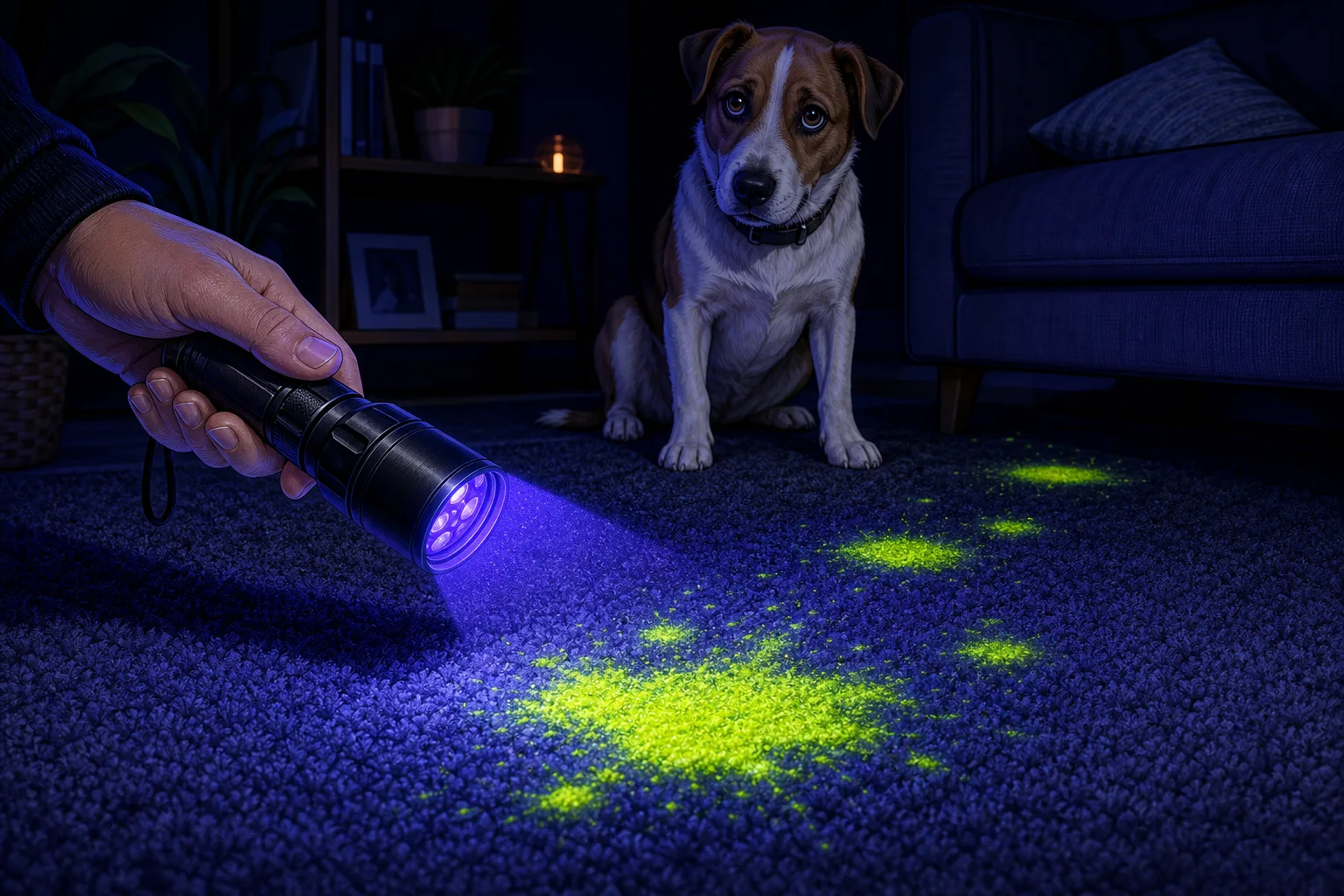
A blacklight is usually a UV-A light that emits very little visible light, which lets fluorescent materials stand out more clearly in the dark.
Not exactly. A blacklight is one type of UV light, usually chosen for fluorescence and glow effects. Other UV sources are built for different jobs.
No. A phone flashlight does not create the right ultraviolet output for reliable blacklight testing, and DIY phone hacks are not a substitute for a real UV light.
Sometimes yes. Some urine stains, security inks, and fluorescent residues show up clearly, but results vary by surface, age, cleaning history, and the exact substance.
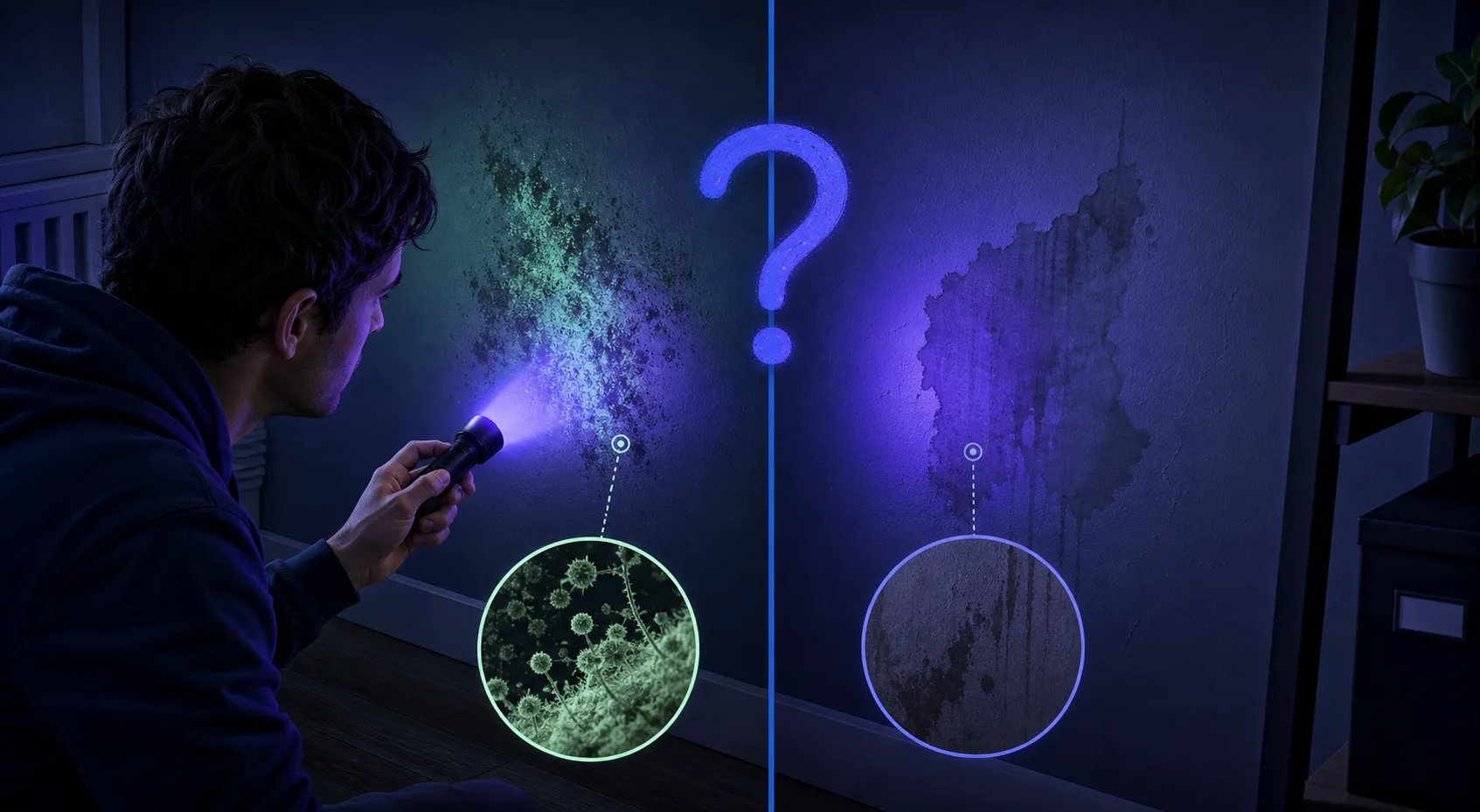
Not reliably. A blacklight may reveal some residues or stains, but it is not a dependable mold test and should not be treated as one.
No. Medical Wood's lamp exams are clinician tools. Consumer blacklights are useful for glow demos and some practical checks, but not for home diagnosis of conditions like ringworm or vitiligo.
Glow products
If you want to recreate the glow effect, start here
Once you know what glows, these are the easiest products to use when you want the effect to be brighter, more repeatable, and more visible across a room. Black Light LED Light Keychain Flashlight
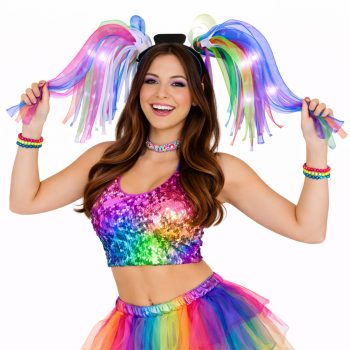 UV Reactive LED Noodle Headband Flashing Dreads
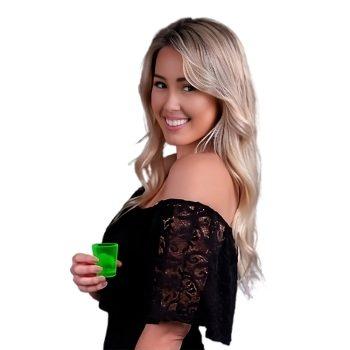 Glow In The Dark Shot Glass Green
Black Light Questions People Actually Ask
What glows under black light most easily at home?
Tonic water, highlighter ink, bright white paper, white fabrics washed with optical brighteners, whitening toothpaste, and vitamin B tablets are some of the easiest at-home tests.
Is 365 nm or 395 nm better for blacklight testing?
A 365 nm light usually reveals fluorescence more cleanly, while a 395 nm light often looks more purple to your eyes and can wash the effect out a little. Both can be fun, but 365 nm is usually better for testing.
Why do white clothes glow under black light?
Many detergents leave optical brighteners on fabric. Those brighteners fluoresce under UV and can make white seams, laces, and fibers look icy blue.
Do all black lights make things glow the same way?
No. Power, distance, room darkness, and wavelength all change the result. A stronger light in a darker room usually gives a much cleaner effect.
Can I use a phone flashlight for this?
Not really. A regular phone flashlight does not emit the right UV light. You need an actual UV or blacklight source.
Are blacklights safe to use at home?
For short, normal use, UV-A blacklights are generally used safely when you do not stare directly into them and you avoid unnecessary long exposure to eyes and skin. Common-sense use matters.
What should I buy if I want a blacklight party effect instead of random household tests?
Start with a small UV flashlight, UV-reactive wearables, glow drinkware, bright decor pieces, and glow accessories. Those products create a much stronger result than relying only on household objects.
Can blacklights help with practical checks too?
Yes. They are often used for checking currency features, revealing hidden security markings, spotting some leak dyes, and finding certain outdoor clues like scorpions.
Are blacklight and UV light the same thing?
A blacklight is a UV-A light chosen to make fluorescence easier to see. Not every UV light is set up the same way, and some UV sources are made for sanitizing, curing, or medical use instead of glow effects.
Can I use my phone flashlight as a UV light?
No. A normal phone flashlight does not emit the kind of ultraviolet light needed for blacklight testing. You need a real UV or blacklight source.
Can blacklight detect urine or mold?
Blacklights can help reveal some urine stains and some fluorescent residues, but they are not a reliable mold test. Mold identification needs inspection and, when necessary, proper testing instead of a flashlight guess.
Can blacklights cause sunburn?
Typical consumer blacklights are usually in the UV-A range, which is not the same as strong sunburn-causing UV-B exposure, but you still should not stare into them or give your eyes and skin unnecessary long direct exposure.
Can UV light detect ringworm or vitiligo at home?
Medical Wood's lamp exams can sometimes help clinicians evaluate certain fungal or pigment conditions, but consumer blacklights are not reliable home diagnosis tools. If a skin issue matters, use a clinician rather than a glow test.
Why do they call it a blacklight?
It is called a blacklight because it emits mostly ultraviolet light with very little visible light, so the room can stay relatively dark while fluorescent materials glow.