
Costume history and buying cues
Michael Jackson's Glove: What It Was Made Of, Which Hand He Wore It On, and Why It Worked
The famous single glove was not just sparkle for sparkle's sake. It made one hand visible under stage lights, turned dance accents into punctuation, and became one of the clearest costume signals in pop history. The materials, the hand, the auction stories, and the design influences all point to the same lesson: one bright accessory can make a costume instantly readable for a dance routine, school event, Halloween party, or music-themed night.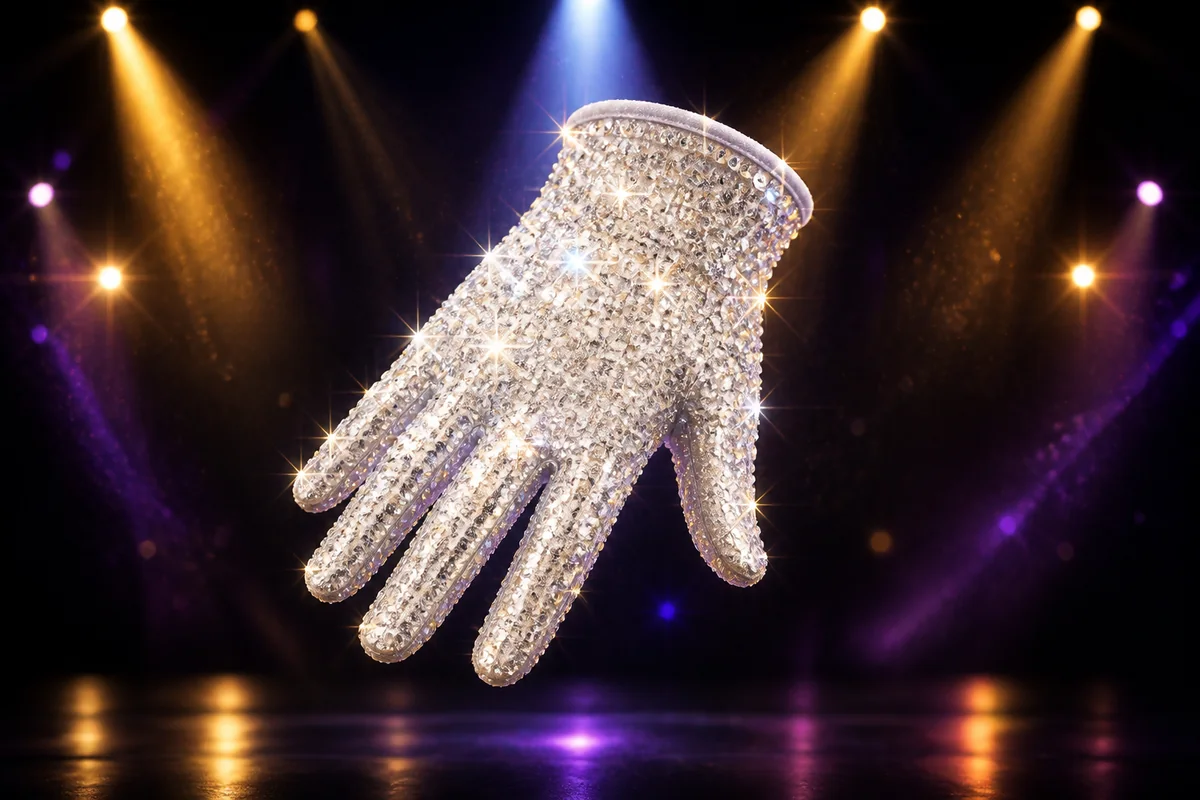
Usually, no. The famous look is best understood as rhinestones, crystals, sequins, or similar reflective decoration catching stage light. The value was visual: bright flashes from a moving hand, not fine-jewelry materials. That is why the glove could look brilliant on television without needing to be made from diamonds. Costume sparkle is built to broadcast movement from across a room.
One sparkling hand gave Jackson a visual signature and helped the audience follow his hand accents without turning the whole costume into glitter. The contrast made the glove easier to notice than a matching pair. Against dark jackets and black pants, one white hand became a moving spotlight. It let a point, snap, pose, or wrist turn read clearly even when the body stayed mostly in shadow.
There were multiple gloves. Some have gone through auctions, some into private collections, and some into exhibition or gallery settings. The famous Motown 25 glove is only one part of a larger wardrobe and memorabilia trail. When people ask where "the glove" is, the better question is which glove: a televised-performance glove, a tour glove, a video-era glove, or a later wardrobe piece with its own documentation.
The Motown 25 moment
The glove became famous because people could see the dance from the back row
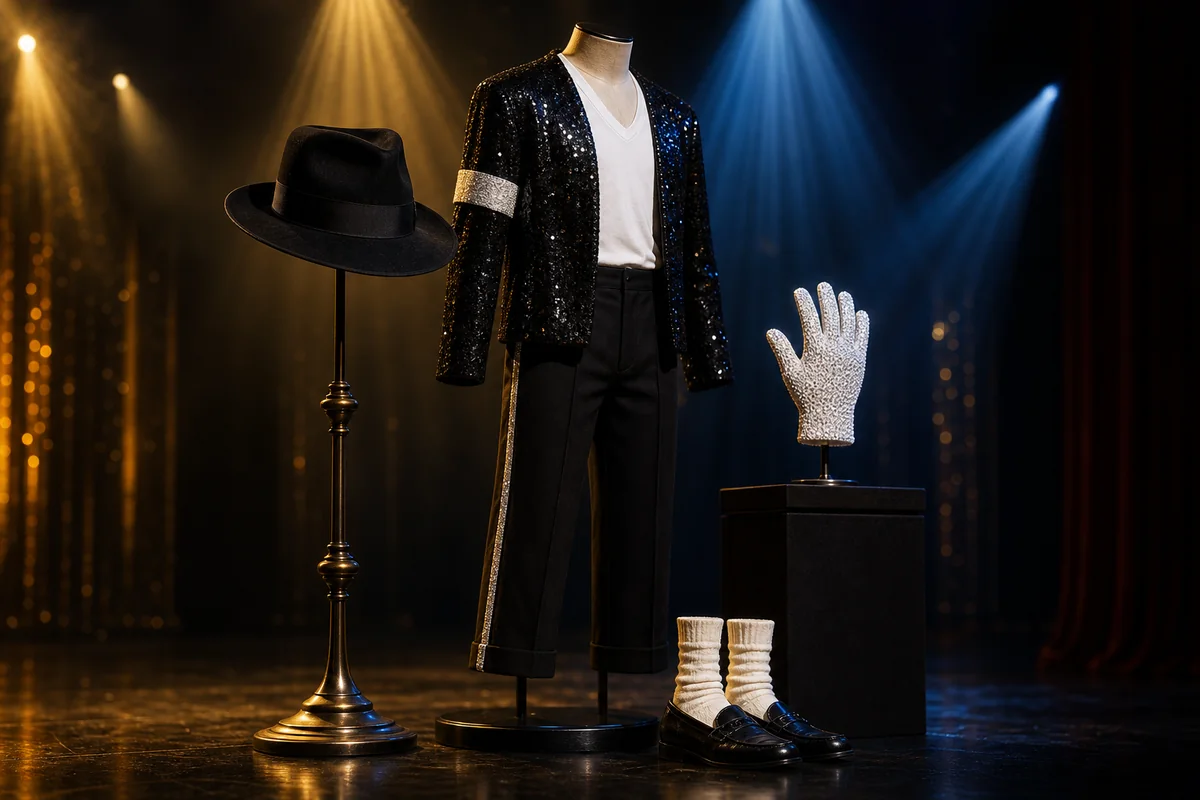
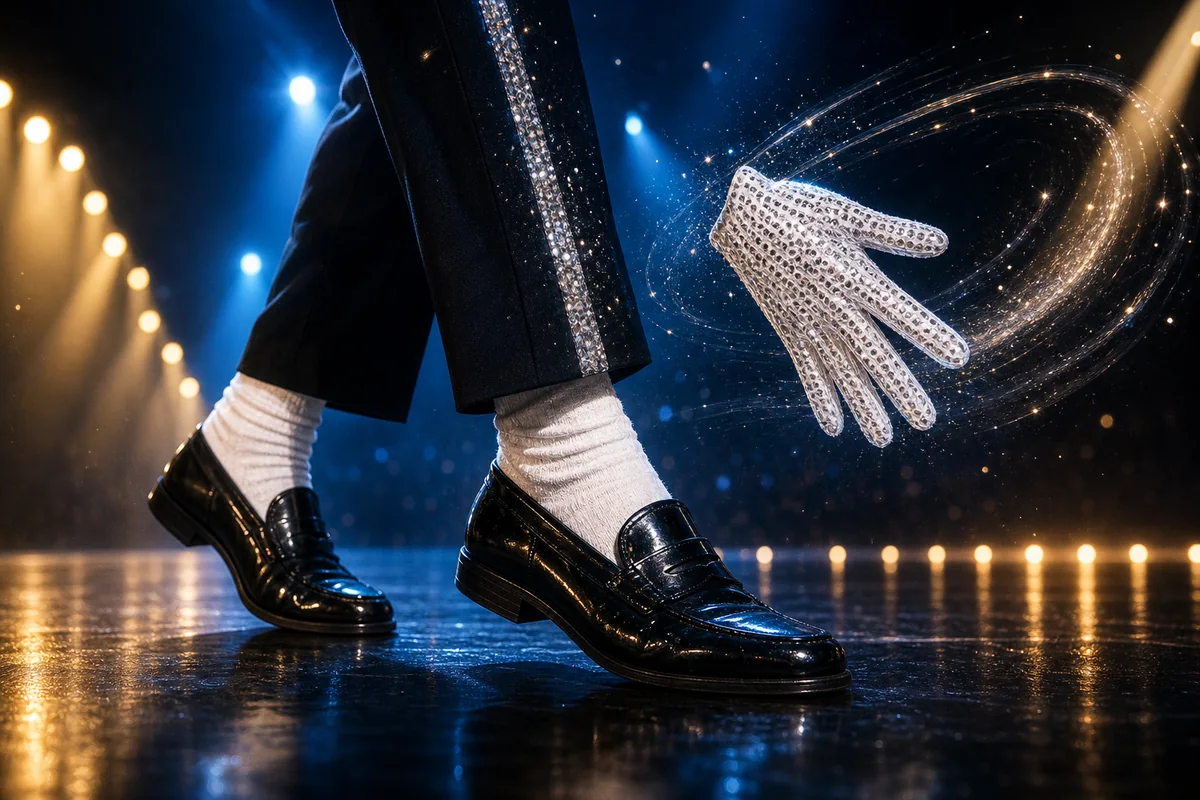
The Billie Jean look people remember is direct and unmistakable: dark jacket, cropped black pants, white socks, black loafers, fedora, and one bright glove. Each part of the outfit has a job. The dark clothing creates a sharp silhouette, the white socks pull the eye to the footwork, and the glove makes the hand visible every time Jackson snapped a pose, hit a beat, or let one movement hang in the air.
That design mattered during the Motown 25 television special because the camera, the stage lights, and the audience all had to read the same performance. A hand gesture that might disappear in a dark suit suddenly became a bright accent. The glove helped turn small movements into part of the choreography, which is one reason the look stayed memorable long after the performance ended.
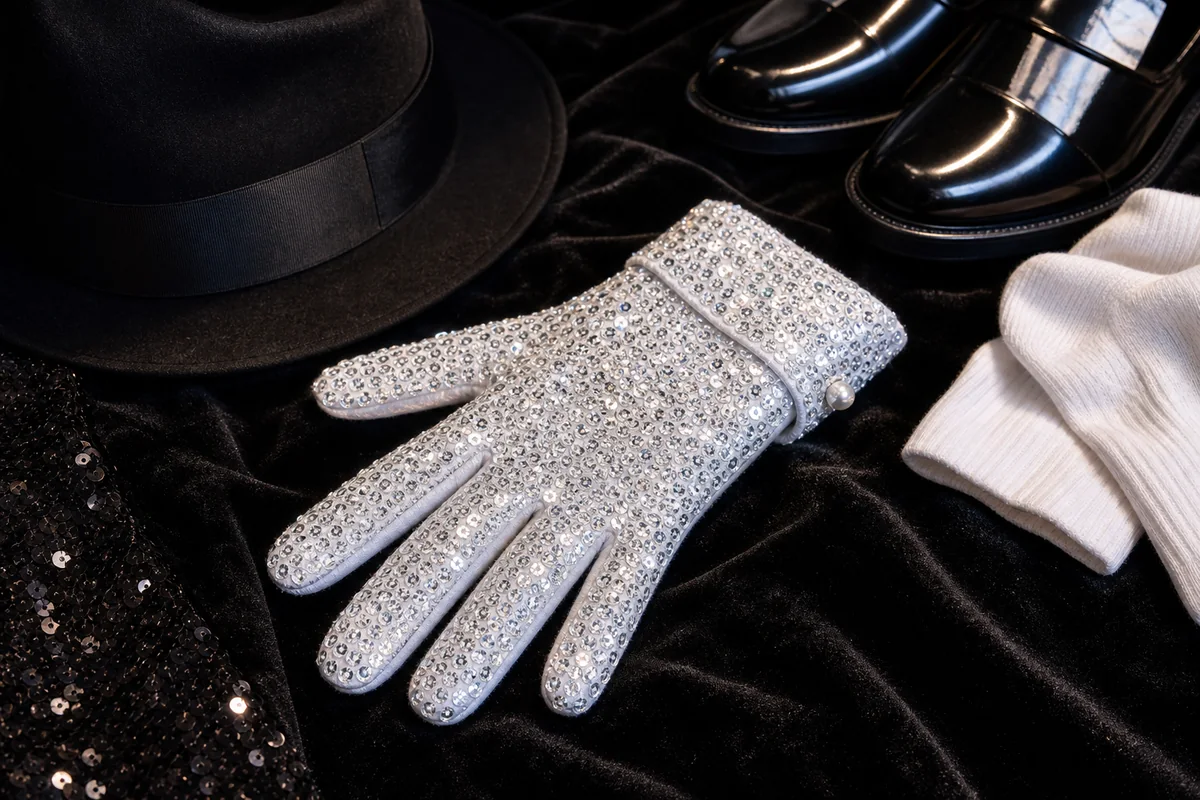
That is why the glove is still copied. One white sparkling hand tells the audience the performer is stepping into a music-video moment before the first dance move lands. For costume buyers, this is also why the glove matters even if the rest of the outfit is simple: it supplies the instant recognition that makes the look work at a party, on stage, or in a photo. Add white socks, black loafers, and a dark hat, and the whole reference becomes readable from a distance.
Diamonds, rhinestones, crystals, sequins
The sparkle mattered more than the jewelry value
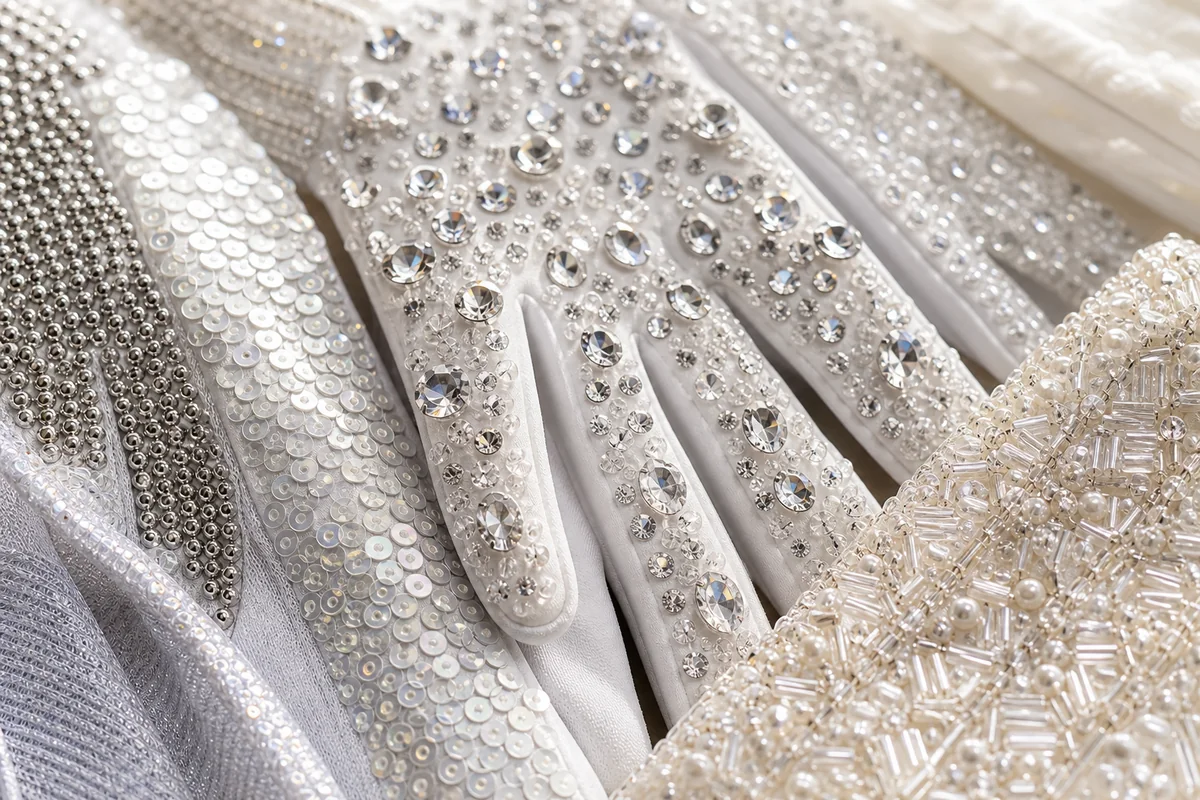
People ask whether the glove had real diamonds because it looked expensive on television. The better way to understand it is as stage sparkle. Rhinestones, crystals, sequins, and other reflective costume materials can look brilliant under lights because they are arranged to catch and scatter light from many tiny points. The surface reads as luxury, but the practical purpose is visibility.
Rhinestones and crystals behave differently from flat sequins. Faceted stones throw sharper flashes when the hand turns, while sequins create a broader shimmer across the fabric. Many costume gloves use a mix of these effects or imitate them with lighter materials. The important buyer question is not whether the glove is precious, but whether the sparkle is dense enough to read in the setting where it will be worn.
That difference matters for costume shoppers too. A sequin or rhinestone glove is not trying to be fine jewelry. It is trying to flash from a distance, especially under party lights, stage lights, or a camera flash. If the glove looks textured and bright from across the room, it is doing the same practical job the famous glove did: making the hand readable. For a dance number or photo booth, that stage-read quality matters more than close-up perfection.
Stage logic
Why one glove worked better than two
The single-glove idea feels simple only after somebody makes it famous. On stage, it solved several problems at once: visibility, contrast, identity, and repeatability. That is why the look survived as more than a one-night costume choice. It was not only decorative; it was a performance tool that made the choreography easier to follow.Fast wrist turns, finger points, and held poses can disappear in a dark outfit. A white sparkling glove makes those accents easy to see from the back of a room, on a television camera, or in a still photo taken mid-dance. It also gives the performer a visual metronome: every time the hand marks the beat, the audience sees the rhythm instead of only hearing it.
One glove stands out more than two because it creates asymmetry. Your eye keeps returning to that one bright hand, especially when the jacket, pants, hat, and shoes are darker and more controlled. A matching pair would make the sparkle feel like trim. A single glove makes it feel intentional, almost like a prop with its own role in the routine.
A fedora, white socks, and one sparkling glove could suggest the whole performance without showing a face. That is the mark of a true costume signature: people recognize the reference from the accessory combination alone. The glove became shorthand for the music, the moonwalk, and the stage persona, which is why it still works as a party or performance cue decades later.
The idea and the influences
Who designed it, and where did the idea come from?
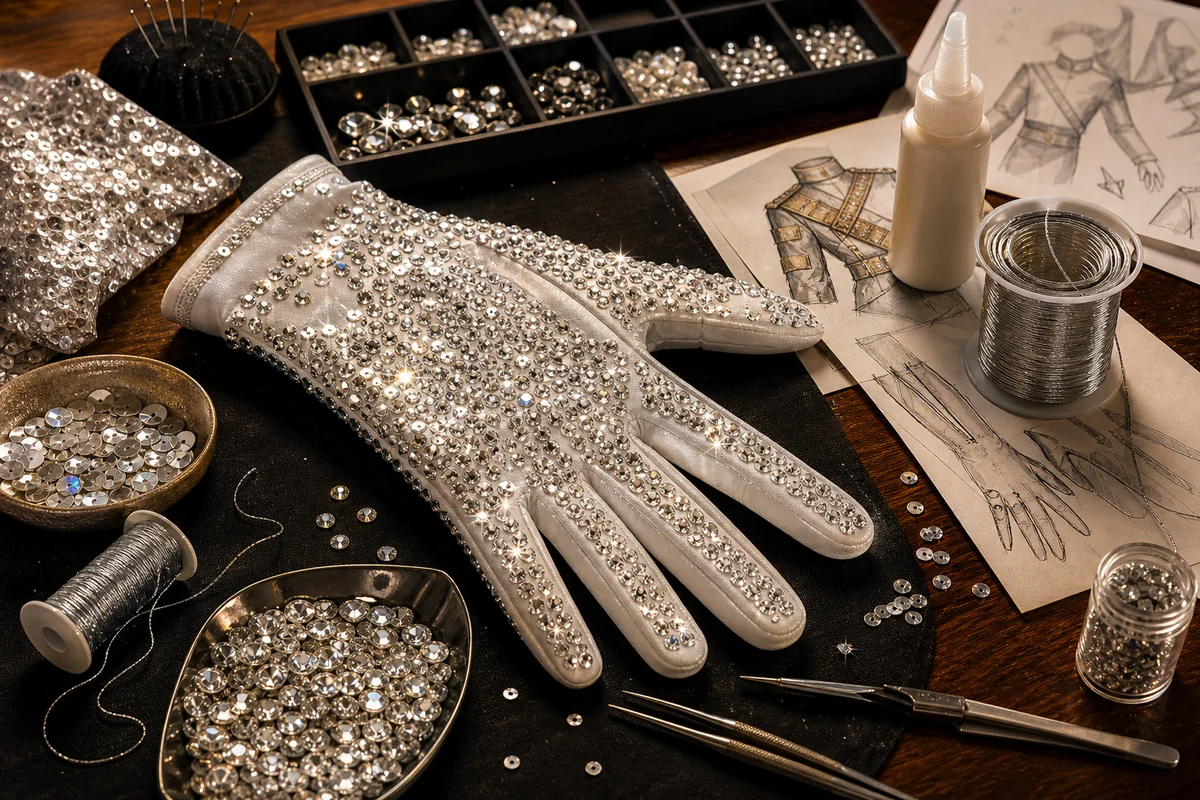
Bill Whitten is one of the key designer names tied to Jackson's famous rhinestone glove and crystal-covered stage details. Whitten understood that pop wardrobe had to work in motion, under lights, and at a distance. A costume piece for a dancer has to be more than pretty: it has to stay flexible, catch light, survive movement, and look unmistakable from the audience.
That does not mean every glove has the same maker or story. The glove became a recurring performance object across different eras, and different gloves can have different wardrobe histories. A television-special glove, a tour glove, and a later display glove may all be authentic in their own lanes, but they should not be collapsed into one object. That is why serious collectors care so much about documentation, photos, letters, and the exact performance connection.
Possible influences are also worth treating carefully. Bob Fosse is often discussed as a broader style influence because of his hats, gloves, angles, and controlled stage movement. Richard Gallo is sometimes mentioned in single-glove history. Jackson's version is the one that became globally understood because he connected the accessory to a dance language people could copy, photograph, and recognize instantly. The glove was simple enough for fans to imitate, but strong enough to become a symbol.
Collectors and auction lore
Where are Michael Jackson's gloves now?
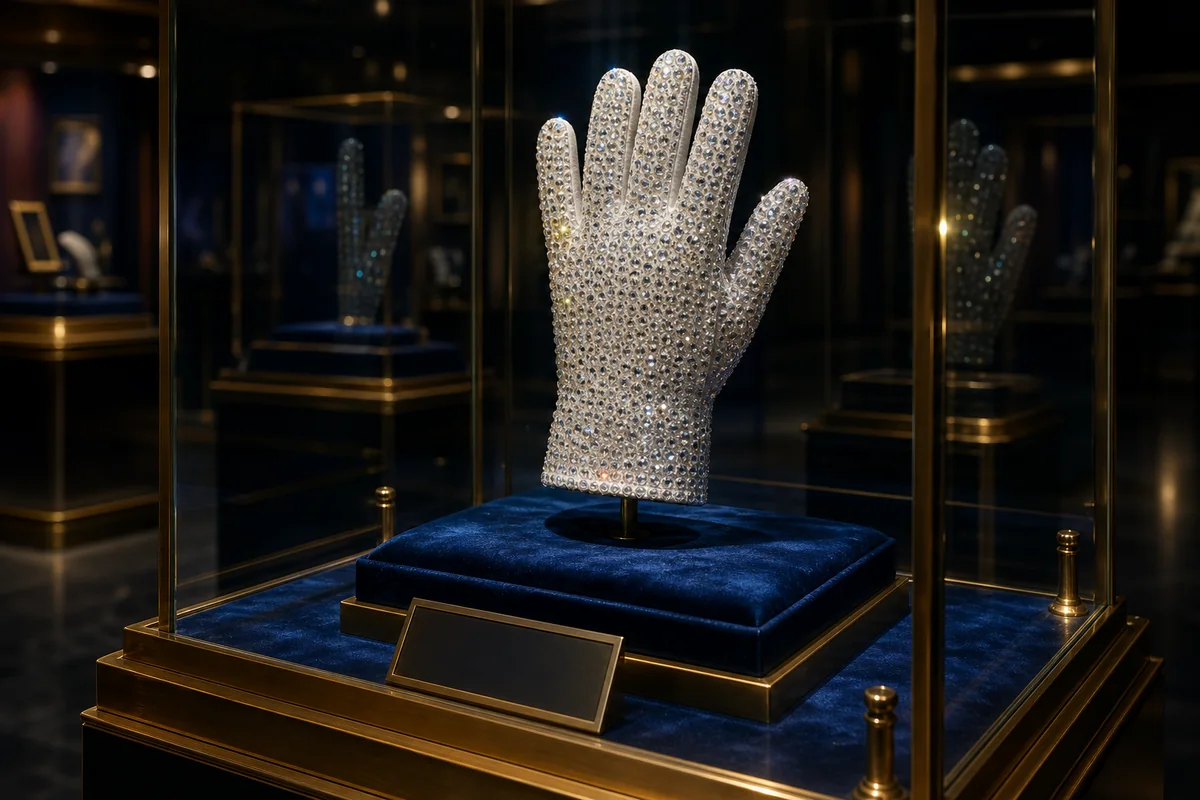
The clearest answer is plural: gloves, not glove. Jackson wore and commissioned more than one. Some pieces have sold through memorabilia auctions, some have gone into private collections, and some have appeared in exhibition settings. A glove tied to a famous televised performance carries a different story than a glove connected to a tour, video, rehearsal, or later wardrobe collection.
The Motown 25 glove was widely reported sold for $350,000 to a Macau collection, which is one reason it keeps appearing in glove-history discussions. But auction prices are not interchangeable. A glove associated with a famous performance, accompanied by credible documentation, and visible in the public memory will be treated very differently from a similar-looking glove without a clear chain of ownership.
Other gloves, including tour-related crystal gloves, have their own auction histories and collector chains. If you see a headline about "the glove," always ask which glove, from which performance, with what documentation. Provenance is the difference between a costume-style glove, a collectible, and a museum-level artifact. For everyday costume shoppers, that history explains the look; it does not mean a party glove needs to be a replica-grade collectible to work.
For costumes, parties, and performances
How to choose a Michael Jackson style sequin glove
If you are buying a costume glove, start with the practical details: which hand, what size, how much sparkle, and whether you need one glove or a dozen for a group performance. A right-hand sequin glove is the straightforward choice for many Billie Jean inspired costumes, but checking the product details matters because costume gloves are often sold by hand, size range, and material style.
Think about the setting before you order. A glove for a dim dance floor should have enough reflective surface to catch colored party lights. A glove for a school performance should fit securely enough that the performer can point, clap, and move without constantly adjusting it. A glove for a photo booth should look recognizable in snapshots, even if the rest of the guest's outfit is simple.
For a single party costume, the glove needs to be recognizable and comfortable. For a school show, dance team, fundraiser, or theme night, consistency becomes more important. Matching gloves on the same hand help a group look intentional, and having a few extras can save the routine if one glove is lost, too small, or damaged before the event. If children and adults are both involved, check sizing early so the glove does not become the weak link in an otherwise easy costume.
- Check right hand versus left hand before ordering, especially if the glove will be used for a specific Billie Jean inspired pose or routine.
- Look for enough sequins or rhinestones to read under party lights, stage lights, or camera flash instead of judging only from a close-up product view.
- For school shows or theme nights, order early enough to test fit, movement, and comfort before the actual performance day.
- For groups, keep all gloves visually consistent so the routine looks intentional, and consider extras for sizing swaps or last-minute replacements.
Beyond one glove
Other famous glove looks in pop culture
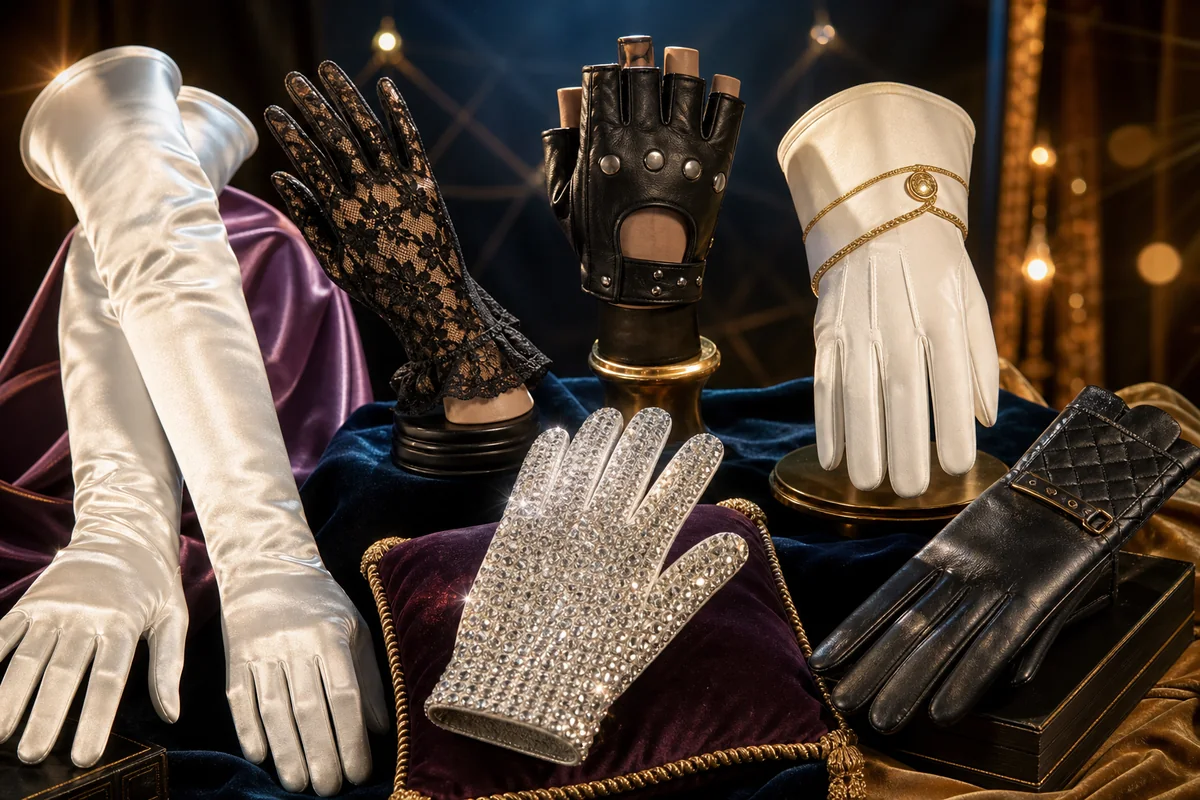
Jackson owns the single sparkling glove in most people's minds, but gloves have always been useful costume language. They can communicate elegance, mystery, rebellion, formality, dance precision, or futuristic stage polish without needing much explanation. The hand is expressive, so covering it with a deliberate material changes the whole character of a look.Audrey Hepburn made opera gloves feel elegant, partly because long gloves extend the line of the arm and make a formal outfit feel polished. Madonna used lace and fingerless gloves as performance attitude, turning the hand into part of a rebellious fashion statement. Karl Lagerfeld turned fingerless gloves into a personal uniform, while Bob Fosse used gloves as part of a precise stage vocabulary where small hand angles mattered.
Formal gloves also carry public and ceremonial meaning. Queen Elizabeth II made gloves part of presentation and protocol, while performers such as Lady Gaga, Prince, and many stage dancers have used gloves because hands are expressive, visible, and easy to turn into a signature. In every case, the glove changes how the audience reads a gesture: elegant, theatrical, strict, playful, rebellious, or futuristic.
The difference is that Jackson made one glove enough. You did not need the whole outfit to understand the reference. A single sparkling glove could stand in for the beat, the pose, the moonwalk, and the music-video memory all at once, which is why it remains such an efficient costume cue decades later. It is one of the rare accessories that can carry a full performance identity by itself.
Bring the look to the party
A small accessory can carry the whole costume
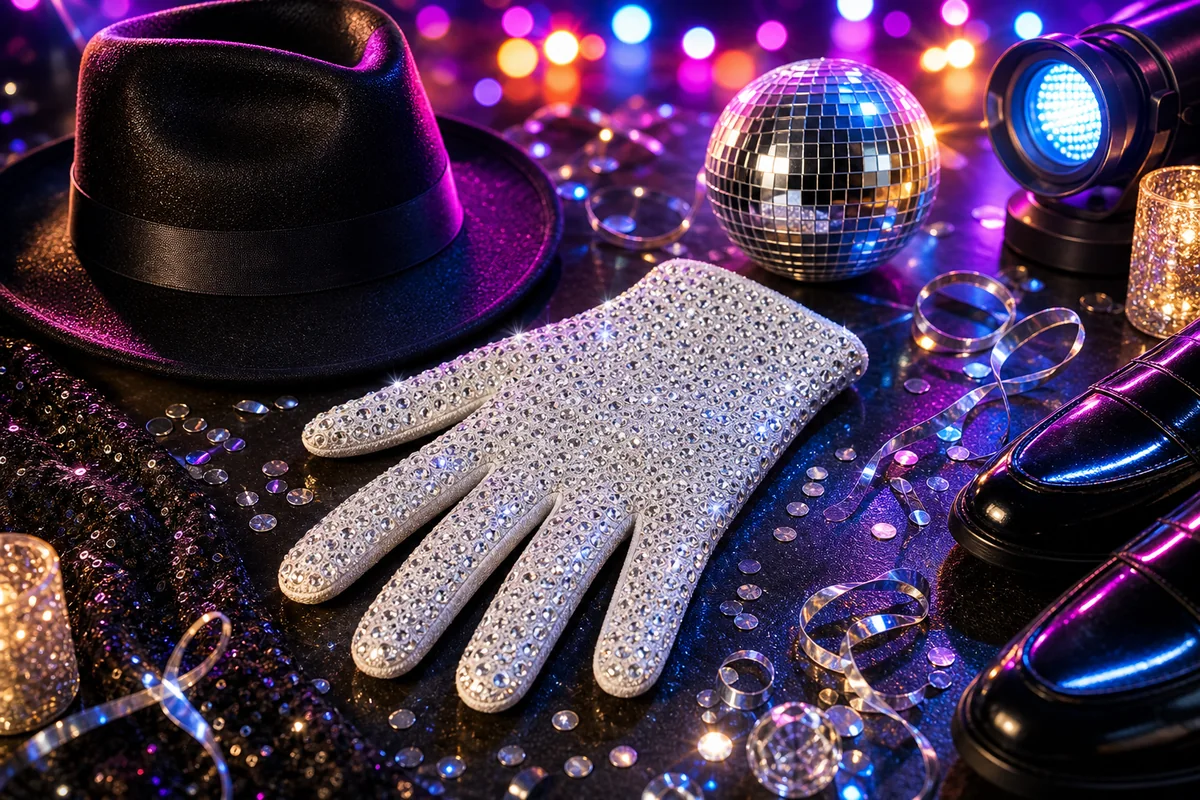
The glove is popular because people recognize it instantly. For a party, dance routine, school performance, Halloween costume, or music-themed event, a sequin glove can carry the reference before the music even starts. It also travels well as an accessory: easy to pack, easy to hand out, and easy to spot in photos when a group is dancing or posing together.
If you are planning an event, think about how the glove will be used. A casual costume party may only need one strong accessory. A stage routine may need matching gloves for every performer. A photo booth or dance-floor giveaway may benefit from extra pairs so guests can join the theme without building a full costume. That makes the glove useful for planners because it gives guests a quick way to participate.
For buyers ordering for more than one person, the safest plan is to decide the hand, quantity, and deadline first. Then think through the environment: bright banquet hall, dark dance floor, school auditorium, outdoor fundraiser, or camera-heavy party. The better the glove reads in that setting, the less the rest of the costume has to work. That is the same lesson the famous stage glove taught: a small accessory can do a surprisingly large amount of visual work.
Blinkee costume glove pick
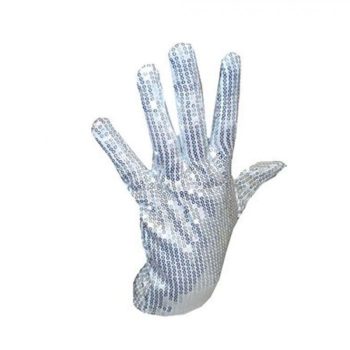 Non Light Up Jacko Thriller Beat It Billie Jean Right Hand Sequin Glove
Before you buy or build the costume
Michael Jackson glove questions worth knowing
The diamond myth, the hand, the designer, the auction trail, the vitiligo theory, and the costume choices all matter for different reasons. Together, they explain why the glove became famous, why several real gloves can have different ownership stories, and what makes a sequin glove work for a party or performance today.Was Michael Jackson's glove made with real diamonds?
The best-known stage gloves are generally described as rhinestone, crystal, sequin, or similarly reflective costume gloves, not diamond jewelry. That distinction matters because the glove was built for stage visibility, not jewelry appraisal. A diamond would be valuable up close, but rhinestones, crystals, and sequins can throw light dramatically from a distance, especially under concert spotlights, television lighting, and camera flashes. The glove looked expensive because the surface was bright, dense, and constantly moving. For a costume, that same principle applies: sparkle coverage and light response matter more than precious materials.
Was the original Michael Jackson glove a golf glove?
Some auction and collector descriptions have referred to modified white gloves or golf-style gloves, and that is plausible because a fitted white glove gives a costume designer a clean base to decorate. The important part for the public image was not the sporting origin of the base glove. It was the transformation: a practical white glove covered with reflective material so the hand became a bright stage object. A plain glove becomes memorable only after the decoration, lighting, and choreography work together. That is why two gloves with similar materials can have very different cultural value if only one is tied to a famous performance.
Which hand did Michael Jackson wear the glove on?
The famous single-glove look is strongly associated with one white glove, and many costume and memorabilia references show a right-hand glove. There are enough performances, photos, tribute costumes, and collectibles that shoppers should still check the product details instead of assuming. If you are copying the Billie Jean stage look for a party or performance, a right-hand sequin glove is usually the straightforward choice. For group routines, hand consistency matters because mirrored gloves can make the lineup look accidental. Decide the hand first, then order enough matching pieces for the whole group.
Why did Michael Jackson wear only one glove?
The strongest explanation is visual performance. One sparkling hand made his gestures easier to see, especially when he wore dark jackets and pants. Two gloves would still sparkle, but one glove created asymmetry, contrast, and instant recognition. It gave the audience one bright point to follow while leaving the rest of the outfit controlled and sharp. That is a classic stage-design idea: guide the eye to the part of the body doing the most expressive work. The glove made hand choreography legible without making the whole outfit busy.
Who designed Michael Jackson's glove?
Bill Whitten is one of the key designer names connected to Jackson's famous rhinestone glove and other crystal-covered stage-wear details. That does not mean every glove in every tour, video, display, or auction lot came from one maker. Jackson reused the visual idea across eras, so the best answer depends on which glove you mean: the early television-performance look, a tour glove, a video glove, or a later collectible. Costume history often gets flattened into one object, but stage wardrobes are usually iterative. Designers, stylists, repair work, and new performance needs can all create multiple authentic versions over time.
Did Michael Jackson wear more than one famous glove?
Yes. There were multiple gloves across performances, tours, videos, exhibitions, and auction lots. This is the main reason glove stories can sound contradictory. One glove may be tied to a television performance, another to a tour, another to a video-era costume, and another to a later presentation or sale. When a headline says "Michael Jackson's glove," the useful question is always: which glove, from which event, with what provenance? This also explains why different prices, owners, and locations can all be true at the same time. The signature look was repeated, but each physical glove has its own story.
Where are Michael Jackson's gloves now?
Different gloves have gone to private collectors, exhibitions, galleries, and auctions. The famous Motown 25 glove was widely reported sold for $350,000 to a Macau collection, while other gloves have appeared in separate memorabilia sales with different prices and histories. Because the glove became a recurring stage object rather than a single one-time prop, there is no single current location that answers the whole question. Some pieces are visible only when a collector, gallery, casino collection, or auction house displays them. Others may be held privately and surface only when they are loaned, sold, or documented.
How much have Michael Jackson gloves sold for?
Notable gloves have sold for very high memorabilia prices, but the amount depends heavily on provenance. The Motown 25 glove was widely reported at $350,000. Other tour, video, or owned-and-worn gloves have sold for different amounts because collectors weigh documentation, condition, era, public visibility, and whether the piece can be tied to a famous moment. A glove with photos, letters, stage-use evidence, and a recognizable performance connection can command a premium. A similar-looking glove without that paper trail belongs in a different collecting category.
Did Michael Jackson wear the glove because of vitiligo?
That is a theory people repeat, partly because Jackson did discuss vitiligo publicly and gloves can cover hands. The stage reason is still easier to see: one sparkling hand made his movements flash under lights and gave him a repeatable costume signature. The two ideas do not have to be treated as enemies, but a buyer or costume fan should understand that the public power of the glove came from performance design. The glove worked even when no one knew anything about medical context because it made the dance clearer. That is the reason it became a visual icon rather than just a private wardrobe choice.
Did Michael Jackson's glove light up?
The iconic glove did not need batteries. It reflected stage light through rhinestones, crystals, sequins, or similar bright decoration. That is why it could look different from photo to photo: under a spotlight it flashes, under softer room light it reads more like a textured white glove, and under camera flash it can sparkle aggressively. This is also why costume buyers should not judge only by a flat product photo. A reflective glove comes alive when it moves through light, especially on a dance floor, stage, or flash photo.
What songs are most associated with the glove?
Billie Jean is the clearest answer because of the Motown 25 performance, the moonwalk moment, and the way the glove fit the black-and-white costume contrast. Beat It, Thriller-era styling, and later performances also keep the glove in the broader Jackson costume vocabulary. For most costume shoppers, "Billie Jean" is the shortest path because the glove, fedora, dark outfit, white socks, and loafers all work together. If the goal is instant recognition at a party, those visual cues matter more than recreating every garment exactly.
Did anyone inspire the single-glove look before Michael Jackson?
Bob Fosse is often discussed as a broader visual influence on Jackson's stage style because of hats, gloves, angled poses, and disciplined movement. Richard Gallo is sometimes mentioned in single-glove history as well. The important distinction is influence versus ownership of the image: other artists used gloves, but Jackson made the single sparkling glove a worldwide shorthand for a performer. Influence in pop style usually works this way. An artist absorbs gestures, wardrobe ideas, and stage grammar, then combines them into a version the public associates with one person.
Did other celebrities copy the single glove?
Many performers, tribute acts, fans, and Halloween costumes echoed the single sparkling glove after Jackson made it famous. His brothers also wore single sparkling gloves at his memorial as a tribute, which shows how strongly the object stood for him. It is less useful to think of every later glove as a direct copy and more useful to see how one accessory became a shared visual language for tribute, parody, dance, and costume. Once an accessory reaches that level, people can reference it seriously, playfully, or affectionately, and the audience still understands the signal.
Why did the glove look so good with the moonwalk?
The moonwalk pulled attention to the feet, while the glove made the upper-body accents pop. Together, the white socks and white glove framed the dance from both ends: the feet created the impossible glide, and the glove caught the beat when the hand pointed, snapped, or froze. That balance is why the costume reads clearly even in silhouette. Without the bright socks, the foot illusion would be harder to follow; without the glove, the upper-body punctuation would be less visible. The outfit turns the whole body into a readable graphic.
What should you look for in a costume sequin glove?
Check whether it is right hand or left hand, whether it fits adults or children, how dense the sparkle is, and whether the glove is comfortable enough to wear through a party or routine. For a solo costume, the most important thing is recognizability. For a group performance, consistency matters more: matching hand, matching sparkle level, and enough extras for sizing mistakes or last-minute substitutions. If the glove will be worn while dancing, avoid anything so stiff that the fingers cannot bend naturally. The glove should add the visual cue without getting in the performer's way.
Where the glove history comes from
Public records for the famous glove story
Michael Jackson glove stories can blur together because there were multiple gloves, performances, auctions, and wardrobe histories. These public references help separate the Motown 25 performance, the designer background, the Macau collection story, the vitiligo discussion, and the moonwalk timeline.Related reading