
Navy Shellback Coin Gift and Display Ideas
Navy Shellback Coin Gift and Display Ideas
Some Navy keepsakes arrive with a whole sea story tucked inside them. A Shellback coin can bring up a first crossing of the equator, a favorite shipmate, or simply a family member’s affection for naval heritage. That makes a little restraint go a long way: let the coin be the opener, then leave room for the recipient to tell as much—or as little—of their own story as they want.
The US Navy Crossing The Line Shellback Bronze Challenge Coin pairs an antique-gold and black finish with a protective case. Its 1.57-inch size makes it easy to set on a desk, tuck into a gift box, or add to a small memory shelf without turning the whole room into a display case.

Start with the meaning, not the legend
In Navy tradition, “Crossing the Line” marks a crossing of the equator. Sailors who have not crossed before are often called pollywogs; the familiar Shellback name is tied to the ceremony and its playful King Neptune imagery.1 It is a useful bit of context for a gift, but it is not a reason to assume someone took part, wants to discuss it, or claims a particular status.
A good gift note stays personal and plain: “Thinking of your time at sea,” “For the shelf where your stories live,” or “Thank you for sharing your Navy years with us.” If the recipient is a confirmed Shellback, they may enjoy the inside reference. If you are not sure, let the design carry the nautical connection without making a declaration for them.
Make a small shelf feel intentional
A Shellback coin looks strongest when it has a little breathing room. Set the included case upright against a bookend, rest it on a dark-blue cloth square, or place it beside one framed photo. A single brass ship model or a small wooden box is enough company; too many anchors, ropes, and signs can make the coin disappear.
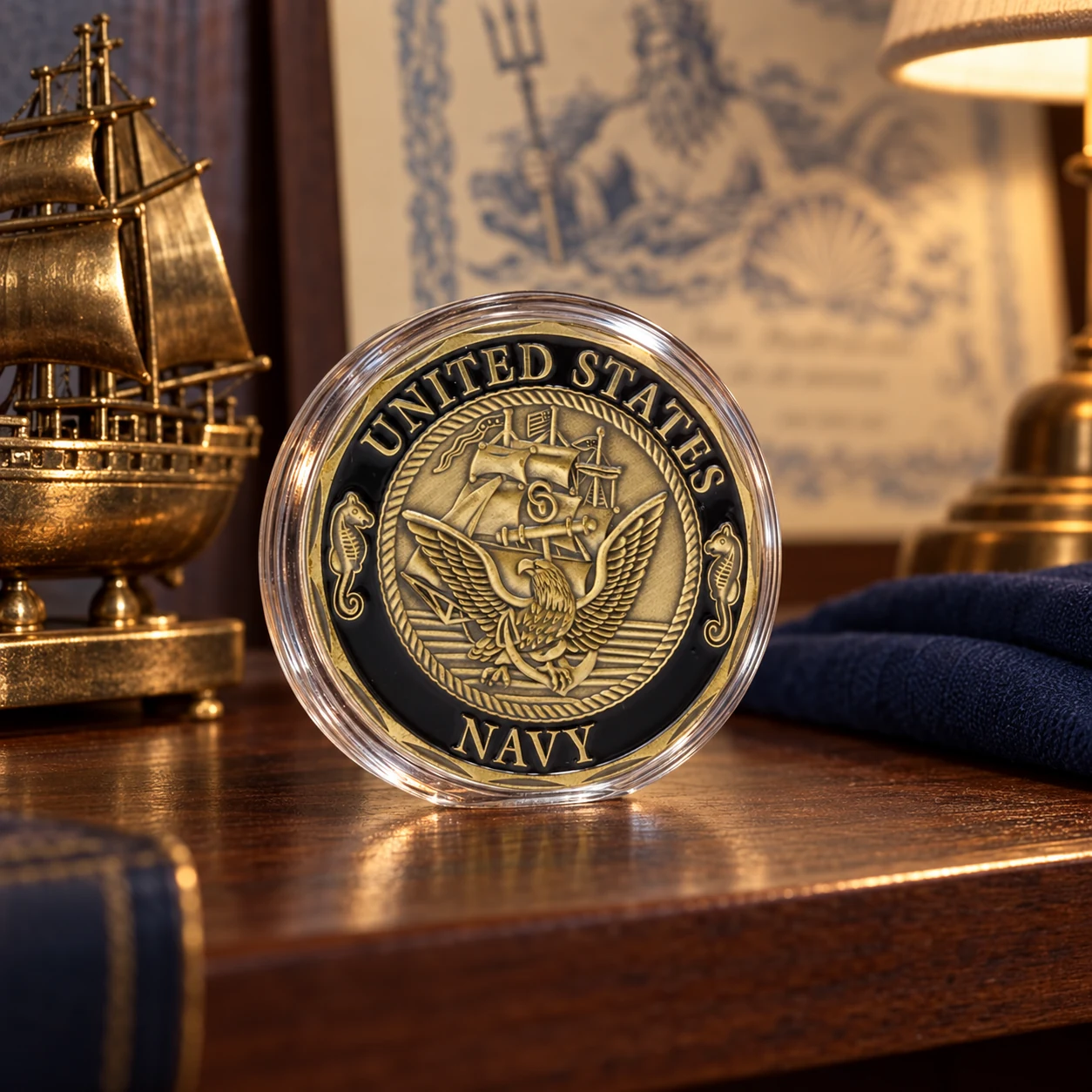
Keep the display out of direct sun and away from a kitchen windowsill or a damp basement shelf. The supplied case helps with everyday dust and handling; a stable indoor spot does the rest. For a coin that is carried, return it to the case before travel rather than letting it roll around with keys and loose change.
Build a gift around a real memory
The most memorable part of this present is often not the coin. It might be a copied photograph, a handwritten note from a grandchild, a reunion program, or the name of a ship written inside the lid of a simple box. Choose one personal item and let it do its job.
A three-piece presentation that stays personal
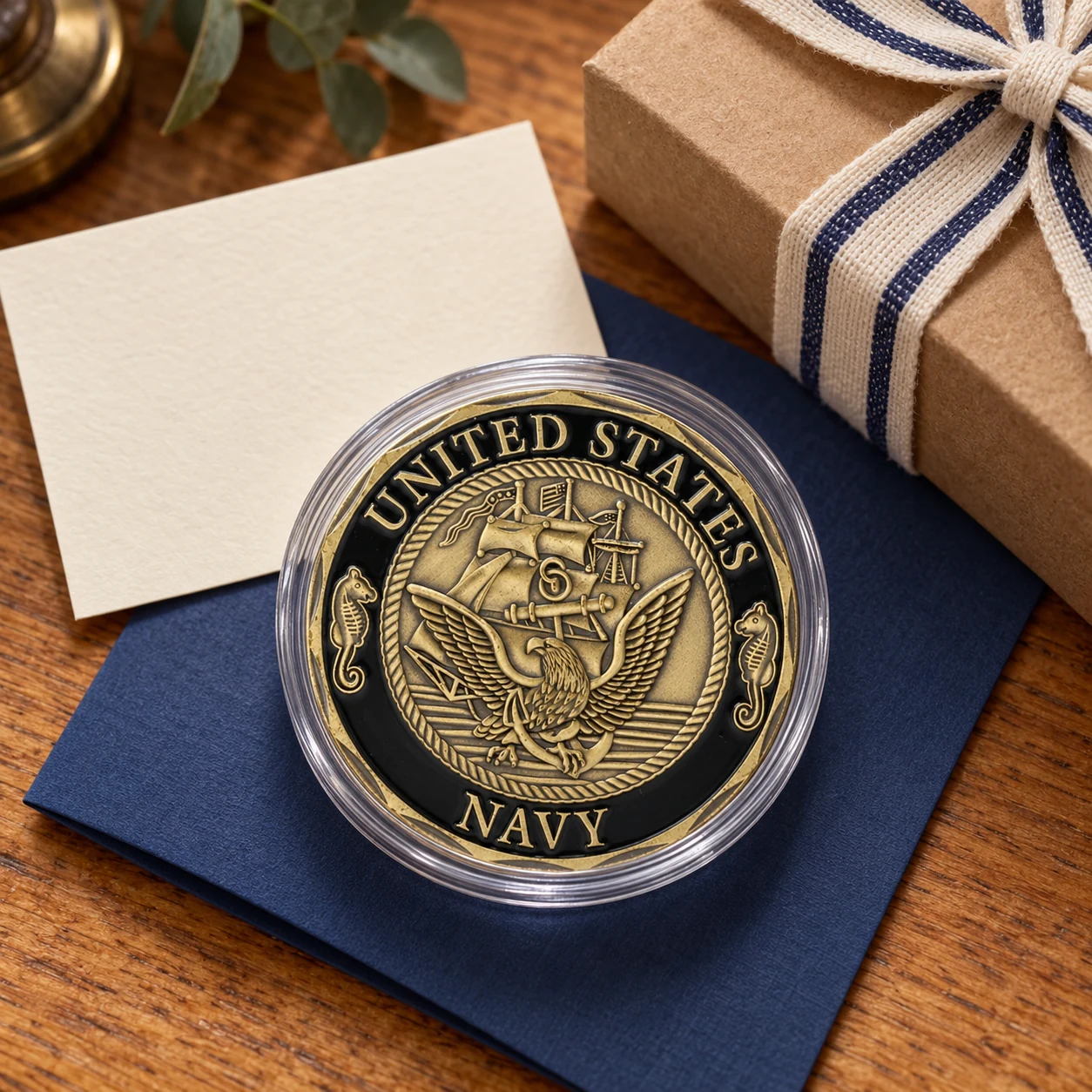
Place the coin in its case, add a blank card with two or three sincere sentences, and include one photo or small memento only if it belongs to the recipient. That leaves the gift polished but not over-scripted. A person who wants to add certificates, cruise books, or more coins later can make the display their own.
For a retirement, homecoming, or birthday, give the package before the crowd arrives or after everyone has settled. A quieter moment prevents the recipient from feeling obliged to turn a private memory into an announcement.
Pair it with the right kind of company
When someone already collects coins, group this piece by the memory behind it rather than by metal color. A cruise photo, a Navy cap pin, or a small list of ships can make a tighter display than unrelated “nautical” souvenirs. If they are just starting, the coin can stand on its own until a story worth adding comes along.
A floating holder is handy when both sides of a coin deserve a look; see the floating challenge coin display ideas for placement options. For a coin intended as a group gift, the sample-first ordering checklist helps keep packaging and recipient counts sensible.
Respect the difference between a keepsake and a credential
This is a commemorative challenge coin, not an official Navy award, certificate, or proof of service. Present it as a thoughtful collectible. Do not add a rank, ship, deployment, or crossing claim to a plaque unless the recipient has confirmed it.
That distinction does not make the gift less meaningful. It makes the gesture more considerate: the coin honors a maritime tradition, while the recipient remains the authority on their own service and memories.
Questions people ask before giving a Shellback coin
Is a Shellback coin right for every sailor or veteran?
It can be a handsome Navy-themed keepsake, especially for someone who enjoys shipboard traditions. If you do not know whether the person crossed the equator or participated in a ceremony, give it as a naval-heritage coin rather than labeling them a Shellback.
What does “Crossing the Line” refer to?
It refers to crossing the equator. The Naval History and Heritage Command describes the related ceremony as a long-running naval custom; modern events are voluntary and focused on morale and entertainment.1
How should the coin be stored?
Use the included protective case for ordinary display and handling. Keep it in a dry indoor place, away from persistent sunlight, moisture, and abrasive loose items.
Give the coin a place to land
A well-chosen keepsake does not need a big speech. Put the coin in a simple box, write the note in your own voice, and leave the recipient room to connect it to the people and places that matter to them. Browse the Navy Coins collection for more Navy-themed pieces, or visit Challenge Coin Stories and Display Ideas for other thoughtful display choices.
1. The Naval History and Heritage Command’s Crossing the Line history describes the equator-crossing tradition, the pollywog-to-shellback transition, and the voluntary character of today’s ceremonies.